Some places possess a different kind of wealth. Sazan Island is one of them.
As an Albanian-born writer, I find myself thinking not only about the future of the island, but about the role places play in shaping our collective identity. Are we owners of beautiful places, or are we brief stewards entrusted with their care?
The conversation surrounding Sazan challenges us to consider whether progress and preservation exist as opposing forces. The answer may lie somewhere between the two.
This, however, requires restraint, wisdom, and an understanding that not everything that has value can be measured monetarily.
In the past week, thousands of Albanians have protested the project in Tirana and along the coast, making it one of the country’s largest environmental controversies in recent years.
The Albanian government has approved a proposed development partnership involving Jared Kushner’s investment company, Affinity Partners, through a subsidiary called Atlantic Incubation Partners.
The project received “Strategic Investor” status from the Albanian government, allowing it to move through an expedited approval process.
The island in question is Sazan Island, Albania’s largest island, located where the Adriatic and Ionian Seas meet near the city of Vlore.
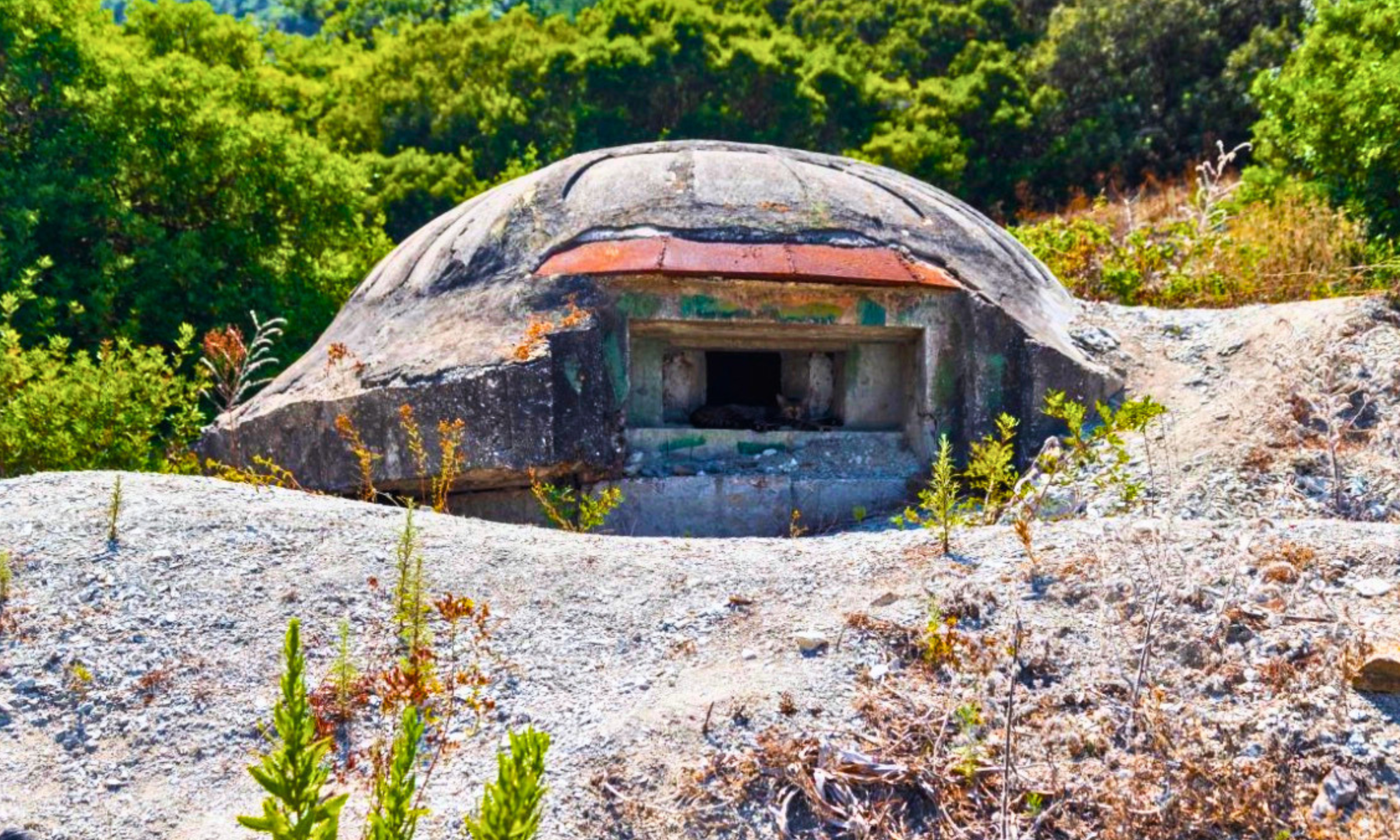
For decades, Sazan was a restricted military zone. During the communist era under Enver Hoxha, the island was heavily fortified with bunkers, tunnels, and military installations.
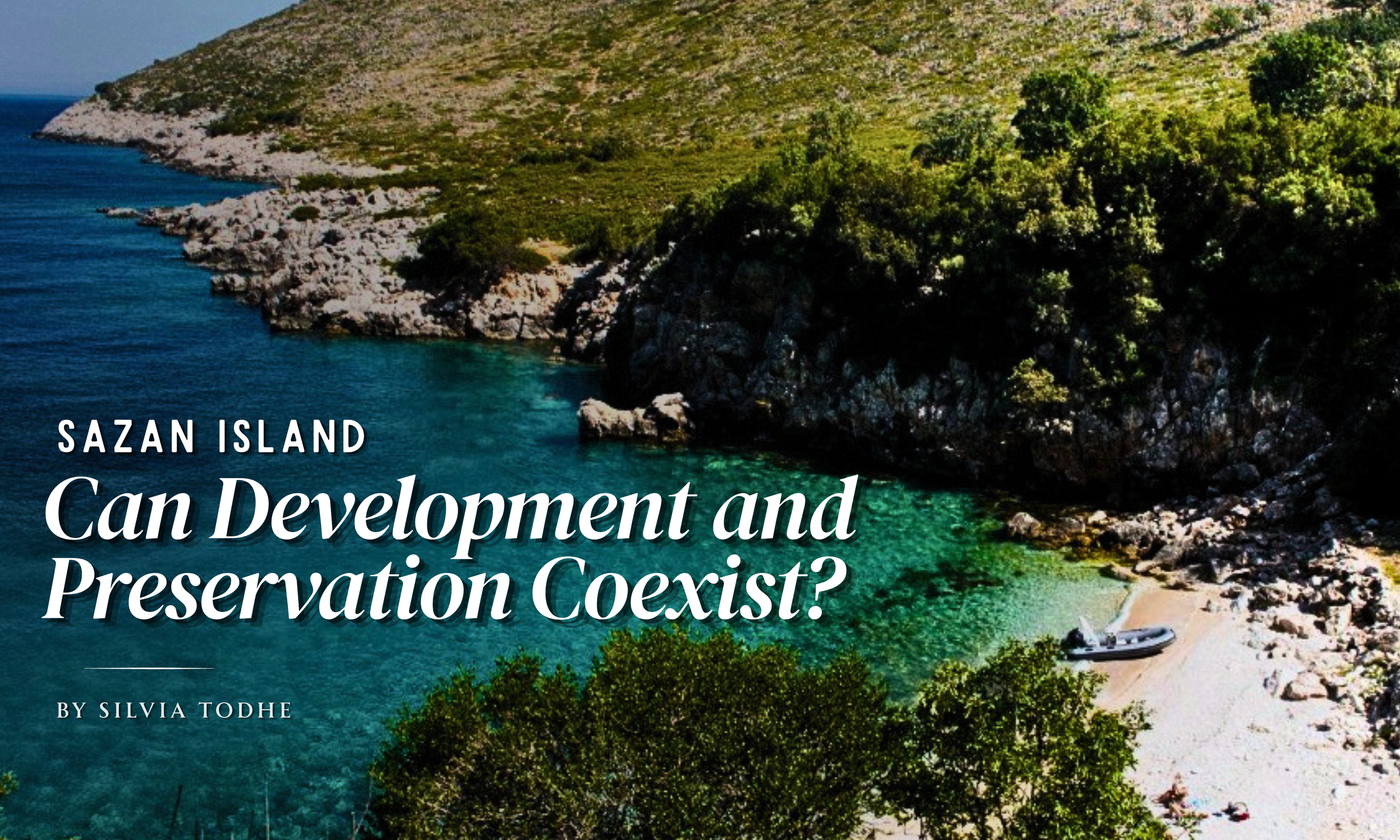
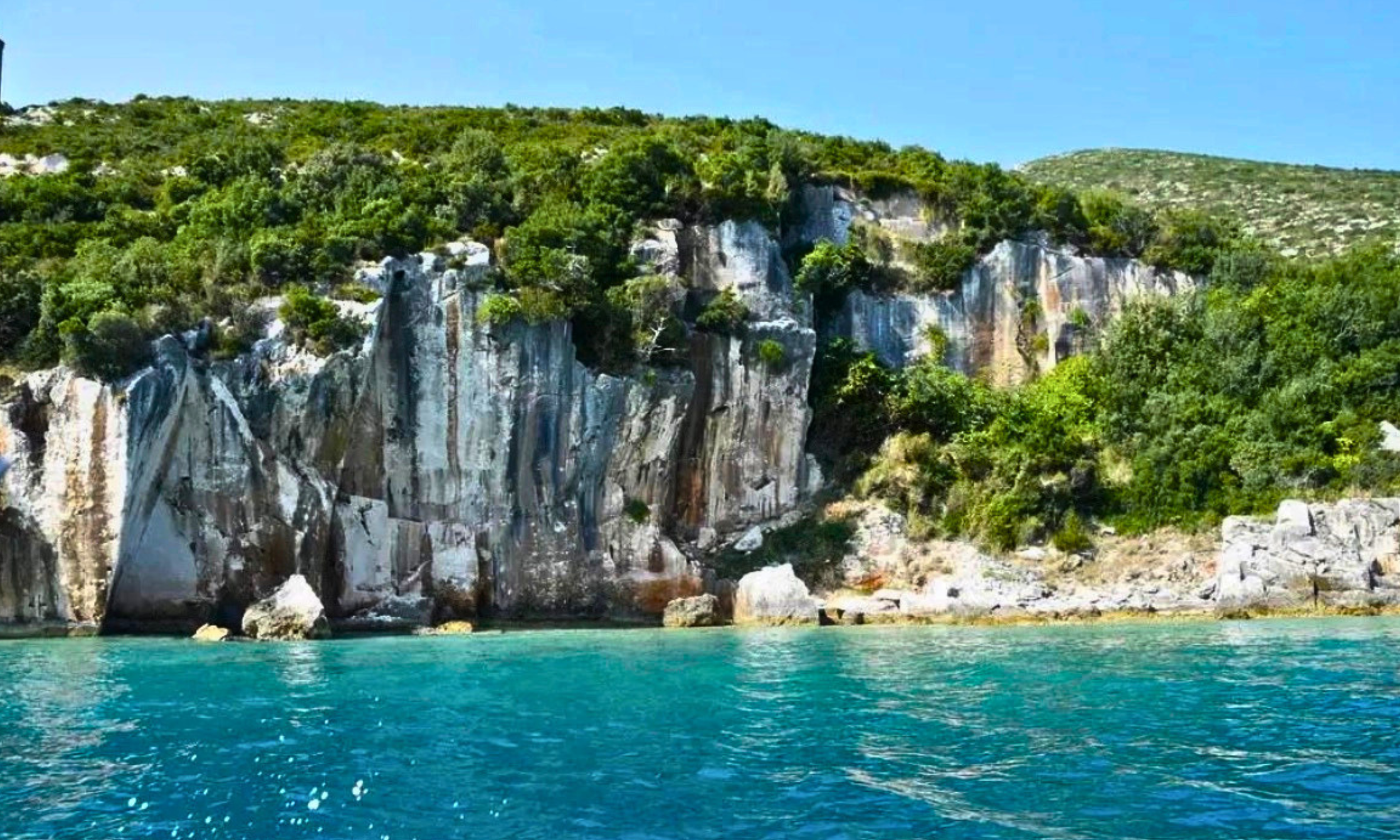
Today, it is considered one of the Mediterranean’s last relatively undeveloped islands, with dramatic cliffs, turquoise waters, and significant ecological value.
WHAT ARE THEY PLANNING?
Publicly discussed plans include luxury hotels and villas, a marina, restaurants, wellness facilities, and the adaptive reuse of some former military structures as part of an “eco-resort” concept aimed at affluent international travelers.
COMPETING VISIONS FOR SAZAN’S FUTURE
Albania’s Prime Minister, Edi Rama strongly supports the project claiming that the development will bring investments, jobs, and infrastructure to the country. Rama believes this is Albania’s opportunity to position the Albanian Riviera alongside destinations such as the Amalfi Coast, Mykonos, and Saint-Tropez.
Despite Rama’s support, many Albanians remain unconvinced that the project’s benefits outweigh its potential costs. Residents, environmental organizations, and opposing groups argue that the project risks privatizing a national treasure while primarily benefiting affluent international visitors.
Aside from the fact that the approval process lacked sufficient public consultation, critics argue that the scale of this development could permanently alter one of Albania’s last undeveloped coastal regions.
Sazan lies within a sensitive marine ecosystem with its nearby areas – Zvernec and the Narta Lagoon – existing as important habitats for flamingos, sea turtles, pelicans, and Mediterranean monk seals.
GEOGRAPHY & NATURAL BEAUTY
Looking at photographs of Sazan today, I am struck by how rare such places have become. Across Europe and the Mediterranean, coastlines have been transformed by tourism and development. Sazan remains one of the few places where nature, history, and silence still exist in conversation with one another.
Sazan Island sits at the entrance to the Bay of Vlorë, occupying a unique position where the Adriatic Sea transitions into the Ionian Sea. For centuries, sailors recognized this location as strategically important because it serves as a gateway between northern and southern Mediterranean routes.
This meeting of seas contributes to the island’s remarkable biodiversity and dramatic coastal scenery. Its steep limestone cliffs, hidden coves and inlets, rocky shorelines, small pebble beaches, hills rising above the sea, and natural sea caves carved by centuries of waves are just some of Sazan’s distinguishable features.
Having been untouched by human activity for decades, portions of the island have become an important refuge for wildlife. Its surrounding waters support the lives of dolphins, sea turtles, numerous fish, and migratory seabirds. These marine ecosystems are considered among the most ecologically significant areas along the Albanian coast.
HISTORY
For centuries, Sazan passed between the influence of empires and kingdoms that shaped the Balkans and Mediterranean world.
The Island of Many Flags
One of the most remarkable aspects of Sazan is how many nations claimed it. During the nineteenth century it was associated at various times with the British-controlled Ionian Islands, Greece, the Ottoman Empire, and eventually Italy. Its position at the mouth of the Adriatic made it a coveted military outpost.
The Italian Era
After World War I, Albania ceded Sazan to Italy, and the island became known as “Saseno.” Italian authorities built military infrastructure and settled a small civilian population there. The island even had its own post office and postage stamps.
World War II
During World War II, Italian and later German forces used Sazan as a naval and submarine base due to its strategic position at the entrance to the Adriatic.
Communist Era
After World War II, Sazan returned to Albania and became one of the most secretive military installations in the country. Initially supported by the Soviet Union, Albania developed naval facilities on the island, including submarine infrastructure. Thousands of soldiers were stationed there during the Cold War.
Under the dictatorship of Enver Hoxha, Albania became increasingly isolated from both East and West. Sazan became a fortress. The island accumulated bunkers, underground tunnels, ammunition depots, observation posts, and military housing. Miles of tunnels were carved into the rock itself. Many still remain today.
Several thousand military personnel lived and worked there. Families attended school, watched films, held concerts, and built a small community despite being separated from the mainland.
Nature Reclaims the Island
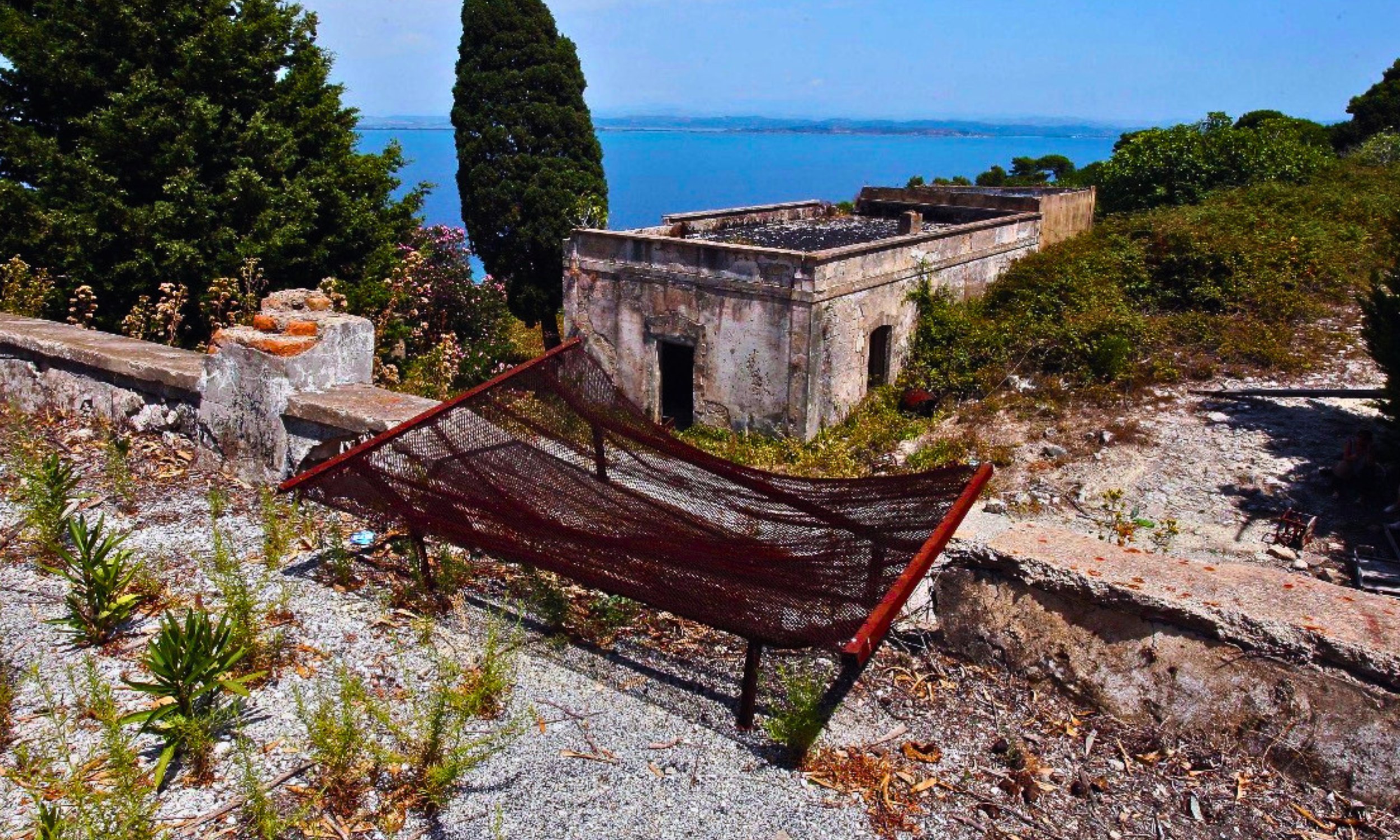
When communism collapsed in the early 1990s, Sazan was abandoned. The military left, buildings deteriorated, and vegetation slowly reclaimed the island. Today, the island exists as a landscape frozen in time. Visitors will find abandoned classrooms, empty apartment blocks, military tunnels, and overgrown structures next to wild vegetation.
MILITARY TUNNELS AND COMMUNIST PAST
What fascinates many historians is that Sazan is not just beautiful—it is a living relic of Albania’s Cold War history. The island contains abandoned military barracks, tunnels, observation posts, and bunkers from the communist era.
When we think of military bases, we often think of weapons and strategy. But the Albanian people lived their lives there: Children learned to read. Families celebrated birthdays. Young people fell in love. Doctors treated patients. An entire human story unfolded on an island most Albanians never saw.
When you stand inside one of Sazan’s tunnels, are you looking at concrete and stone? Or are you standing inside a place that still carries traces of the fears, hopes, routines, and dreams of those who once lived there?
Sazan may be an island, but in many ways it is also a living archive—one that contains layers of Roman, Venetian, Ottoman, Italian, Soviet, Albanian, and human history all at once. And that is what makes it far more than a beautiful piece of land.
Some advocates hoped it would eventually become a preserved historical and ecological site rather than a luxury resort.
WHERE BEAUTY AND HISTORY EXIST SIDE BY SIDE
What makes Sazan remarkable is not any single chapter of its story, but the accumulation of all of them.
Roman sailors, Venetian merchants, Ottoman administrators, Italian soldiers, Albanian families, Cold War military personnel, environmentalists, tourists, investors, and citizens have all attached different meanings to the same piece of land.
This remarkable place reminds us that landscapes are never static. They evolve with each generation while preserving traces of those who came before.
The island is not beautiful despite its history – it is beautiful because nature has slowly reclaimed it.
CAN DEVELOPMENT AND PRESERVATION COEXIST?
Only when development serves a place can preservation and progress coexist. When people hear “preservation,” they often imagine freezing a place in time. When they hear “development,” they imagine progress and economic opportunity.
The High Line in New York or Tate Modern in London are two of history’s most notable projects to have successfully recognized these two seemingly opposing forces. Rather than erasing the past, their histories remained visible and their purposes were given new life.
A development that removes every trace of the island’s military history, restricts public access, or significantly damages its ecosystem would destroy the very qualities that make Sazan unique.
As someone who works in museums and cultural institutions, I encounter this principle regularly: historic houses are restored with modern climate systems, museums add elevators and accessibility features, and historic districts adapt buildings for modern-day routines.
The challenge is determining where stewardship ends and transformation begins.
CONCLUDING REMARKS
Maybe the real question we should be asking ourselves is not whether development and preservation can coexist, but whether we possess the wisdom to allow them to.
Too often, preservation asks us to look backward while development urges us forward. Yet places such as Sazan remind us that our responsibility is to do both simultaneously.
We are not just inheritors of landscapes, but temporary stewards of them. The decisions we make today will determine what future generations encounter tomorrow: a living record of history, a thriving natural ecosystem, and a place of enduring beauty or a memory of what once existed.
The most successful developments are not those that transform a place into something entirely new. They are those that recognize what is already there and choose to build in conversation with it.
Progress need not erase memory. At its best, it can become one of the ways memory endures.