Night after night audiences dressed in their finest attire pack the theaters to witness classically trained artists perform tales of love, tragedy, and hope. Discover how ballet has been moving audiences and inspiring artists across the globe for more than four centuries.
When actor, Timothy Chalamet commented somewhat jokingly during a recent public segment to Matthew McCoughey that he wouldn’t want to work in — “ballet or opera… where it’s like, ‘Hey, keep this thing alive, even though no one cares about this anymore,” it ignited an uproar from dancers, singers, and lovers of the performing arts around the world.
While ballet (and Opera) may not dominate the headlines or receive “coveted awards” such as the Oscar(s), this extraordinary discipline transcends trends. It has endured revolutions, wars, cultural shifts, and technological transformations — making its way from the royal courts of Renaissance Europe to modern theaters across the globe.
Ballet is the highest form of classical art, blending tradition with modern storytelling. Tales of love, tragedy, and hope are performed, moving audiences and inspiring artists across the globe.
In honor of Ballet and its contribution to the arts and humanity, here are the most iconic ballets that everyone should experience at least once in their lifetime:
JEWELS
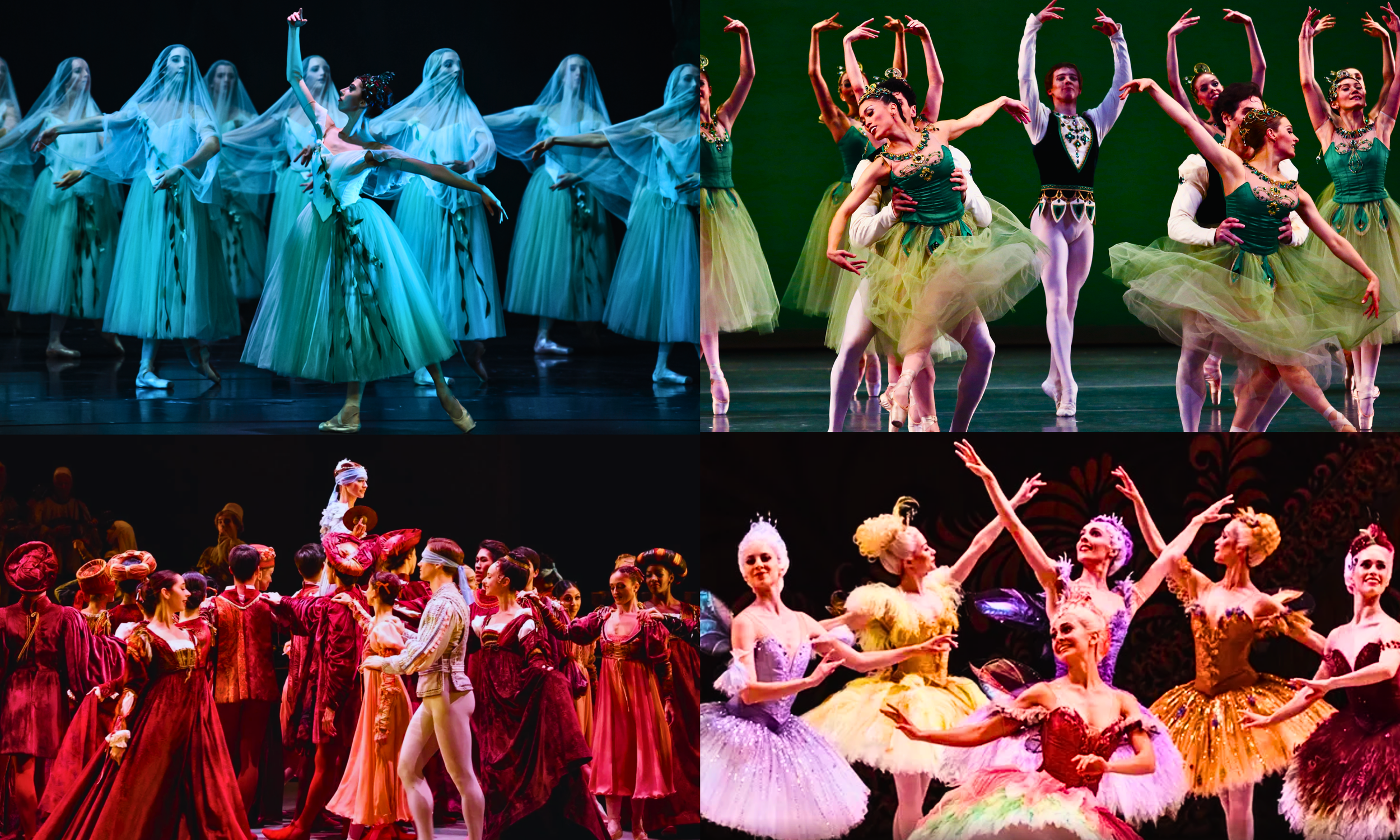
Famous for its dazzling costumes and masterful showcasing of different facets of classical dance, Jewels is a staple in the repertoire of major ballet companies worldwide. Jewels is an iconic three-act, plot-less ballet choreographed by George Balanchine for the New York City Ballet in 1967. It is renowned as the first full-length abstract ballet.
Inspired by jeweler Claude Arpels, the ballet uses gemstone colors to unify three different dance styles in three distinct sections:
Emeralds (French Style) evokes French romanticism with soft, lyrical movement is set to music by Faure.
Stravinsky’s music sets the tone for the Rubies (American Style) representing American neoclassicism, characterized by jazz-influenced, witty, and high-energy dancing.
Dancing to music by Tchaikovsky, the Diamonds (Russian Style) are a tribute to the grandeur of Russian Imperial ballet, featuring large-scale, classical choreography

Source: The Boston Globe
GISELLE
Considered the "archetype" of Romantic-era ballets, Giselle is one of the most performed ballets worldwide. It is a masterpiece of the Romantic ballet era, making its premier on June 28th 1841 at Paris Opera.
Themes of love, betrayal, supernatural vengeance, redemption, and forgiveness are portrayed throughout this ballet’s two acts.
Giselle features a peasant girl who dies of heartbreak after learning that her lover, Count Albrecht, is betrothed to another.
The role of Giselle is highly coveted, demanding both dramatic acting and technical precision.
Signature moment in Giselle? The eerie second act with the ghostly Wilis dancing in moonlight.
Key elements include Adolphe Adam's haunting score, and iconic, ethereal choreography by Jean Coralli and Jules Perrot, often set in a rustic village and a ghostly forest.

Source: Gran Teatre del Liceu
SWAN LAKE
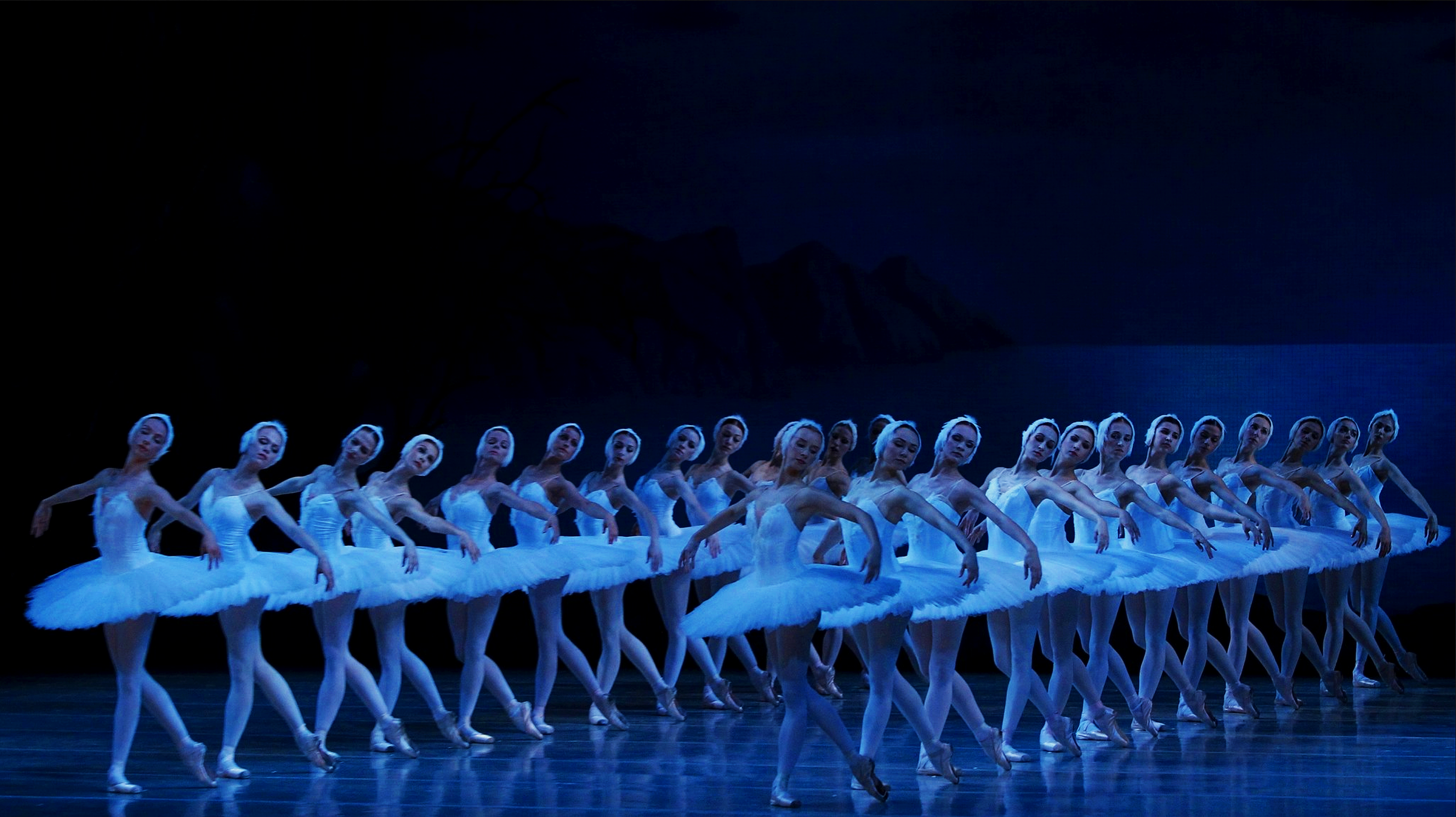
Haunting music by Russian composer Pyotr Ilyich Tchaikovsky (1875-1876) and choreography by Julius Reisinger in Swan Lake, makes this ballet and its epic scenes - the corps de ballet of 24 swans moving in perfect unison - one of the most breathtaking scenes in dance history.
The performance is made up of two acts based on Russian and German Folk tales which tells the story of Odette a princess turned into a swan by an evil sorcerer’s curse. Swan Lake’s most memorable moment? The dancer performing both Odette (White Swan) and Odile (Black Swan) in the same performance.
Swan Lake premiered by the Bolshoi Ballet on March 4th 1877 at the Boston Theater, Moscow. Despite its initial failure, it is now the most popular ballets of all time.
Source: NYTimes
ROMEO AND JULIET
Romeo and Juliet is one of the most powerful and dramatic ballets ever created.
This 20th century ballet features music composed by Sergei Prokofiev from 1935 and choreographed by Kenneth MacMillan for The Royal Ballet in 1965.
The story follows Shakespeare's plot closely, focusing on the forbidden love between Romeo (a Montague) and Juliet (a Capulet).
The performance includes three acts portraying the intense fleeting love of the characters amidst a violent feud in Verona.
The ballet highlights pivotal moments, including the balcony scene ‘balcony pas de deux’, the ballroom scene, and the tragic finale in the tomb.
Significant emotional dances such as the Dance of the Knights make this ballet so memorable and iconic.

Source: English Ballet Theater
THE NUTCRACKER
While it wasn’t an initial success when it was first performed in st. Petersburg, Russia in 1892, the Nutcracker became a Christmas tradition after it premiered in the West during the 1940s.
Nutcracker tells the story of a young girl, Clara (or Marie), who on Christmas Eve receives a nutcracker doll that comes to life and leads her on a magical journey through a world of toy soldiers and Land of Sweets.
This famous two act ballet featuring music by Pyotr IIyrich Tchaikovsky, plot based on E.T.A. Hoffmann's story The Nutcracker and the Mouse King, adapted by Alexandre Dumas père.
The ballet features iconic dances such as the ‘Waltz of the Flowers’ and the ‘Dance of the Sugar Plum Fairy’.
The magical staging, imaginative characters, and beloved music such as ‘Dance of the Sugar Plum Fairy’ - makes this ballet a staple of the holiday season.

Source: NYTinmes
SERENADE
Considered a ballet without plot, Serenade is an iconic, neoclassical ballet featuring 28 dancers in blue costumes forming intricate, shifting patterns, incorporating real-life rehearsal accidents (like a dancer falling or being late) into the performance.
Created for students at the School of American Ballet, Serenade was intended as a lesson in stage technique, featuring 17 girls in lines.
Today this ballet is known for its dream-like quality and ethereal ambiance, considered one of the most beautiful and mystical ballets ever created, evoking a sense of community among its dancers.
It consists of four movements—Sonatina, Waltz, Russian Dance, and Elegy—typically performed with a tragic, haunting ending.
Serenade features famous moments like ‘runoff girl’ (who arrives late), a girl falling, and a ‘Dark Angel’ figure.
The mastermind behind the choreography of this ballet was George Balanchine in 1934 who set the ballet to Tchaikovsky’s music, marking this as his first ballet created in America.

Source: New York Times
LA BAYADERE
La Bayadère (The Temple Dancer) is a renowned 1877 classical ballet choreographed by Marius Petipa with music by Ludwig Minkus, telling a tragic tale of love, betrayal, and vengeance set in ancient India.
Nikiya, a temple dancer, and Solor, a noble warrior, swear eternal love. The High Brahmin also loves Nikiya, while the Rajah compels Solor to marry his daughter, Gamzatti.
After Nikiya is killed by a venomous snake hidden in a basket of flowers by Gamzatti, Solor hallucinates her in the "Kingdom of the Shades".
Famous for the "Kingdom of the Shades" scene, it follows the temple dancer Nikiya, her lover Solor, and his forced betrothal to Gamzatti.
The Kingdom of the Shades is acted as a standalone piece, this Act 3 scene is considered a masterpiece of academic classical ballet, featuring 32 dancers in white performing a hypnotic, repetitive descent.

Source: The Independent
DON QUIXOTE
Based on Cervantes' novel, the story follows the young lovers Kitri and Basilio, who must overcome her father’s desire to marry her to the fop Gamache. Don Quixote and his squire, Sancho Panza, aid the lovers in their romantic journey.
Renowned for its high-energy, technically demanding, and spectacular dancing, Don Quixote is a celebrated three-act classical ballet, originally choreographed by Marius Petipa with music by Ludwig Minkus, premiering in 1869.
It is a vibrant, bravura production focusing on the romance between Kitri and Basilio, with Don Quixote and Sancho Panza acting as linking characters.
Don Quixote is famous for its Spanish-themed, energetically witty choreography and scenes such as the lively tavern scene, vision scene (or the dream of Dulcinea), and the technically demanding Grand Pas de Deux in Act III.

Source: The Times
THE RITE OF SPRING
Although designed as a work for the stage, The Rite of Spring’s specific passages, characters, and action along with its music achieving equal if not greater recognition as a concert piece is what makes this ballet widely considered as one of the most influential musical works of the 20th century.
On premiere night at the Theatre des Champs-Elysees on May 29th in 1913, the avant-garde nature of the music and choreography caused a sensation. The reviews of the performances in 1924 almost a decade later coined the first night reactions to cause a near riot by audiences.
Known as a cornerstone of the classical repertoire and the height of the Romantic era, it was one of the first full-length ballets to feature extensive, dramatic pointe work.
This ballet’s orchestral concert work by the Russian composer Igor Stravinsky. Written for the 1913 Paris season of Sergei Diaghilve’s Ballets Russes company - the original choreography was by Vaslav nijinsky with stage designs and costumes by Nicholas Roerich.

Source: The Times
THE SLEEPING BEAUTY
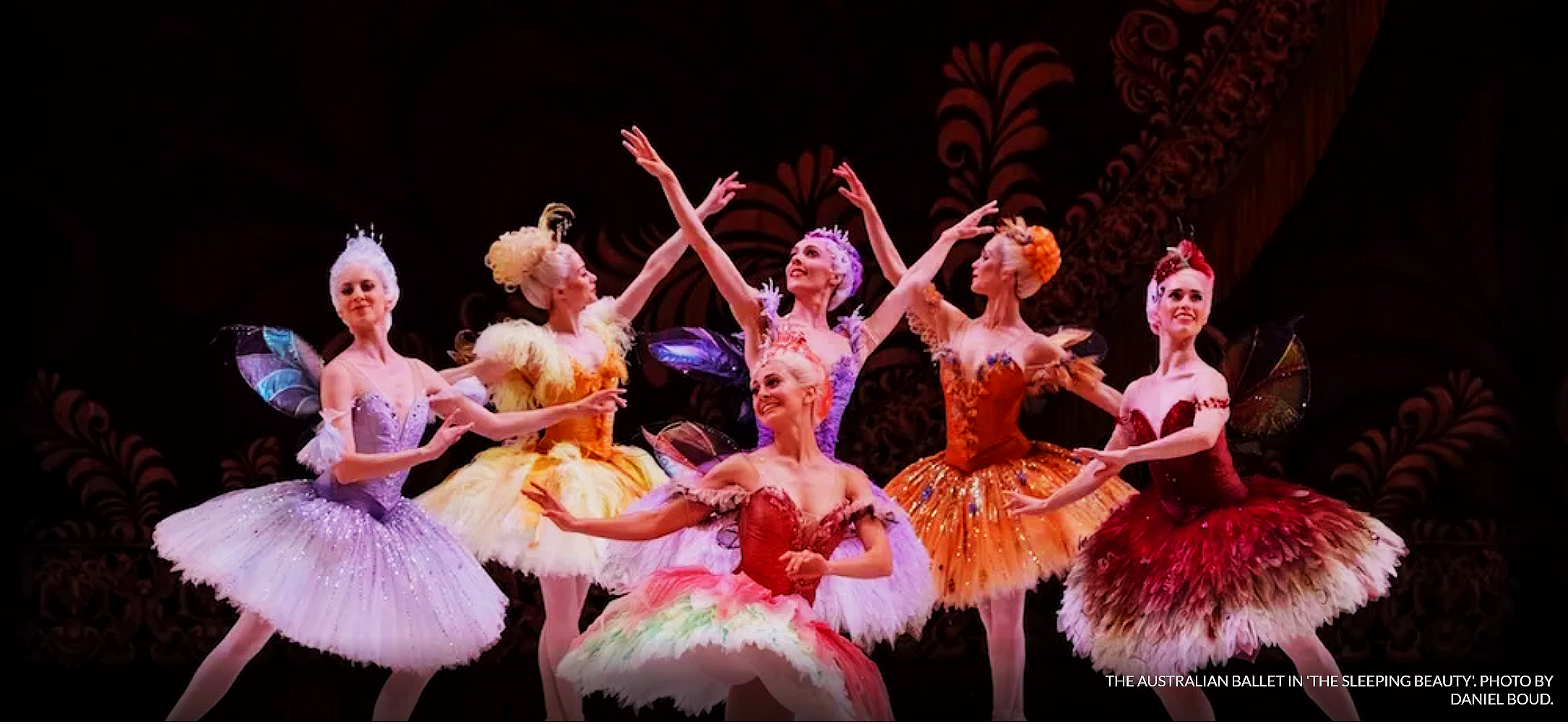
Sleeping Beauty is a landmark 3-act classical ballet by Pyotr Tchaikovsky and choreographer Marius Petipa, premiered in 1890.
It follows Princess Aurora, cursed by Carabosse to sleep for 100 years after pricking her finger, only to be awakened by Prince Désiré's kiss.
The ballet is famous for its classical repertoire, high technical demand, and scenes such as The Rose Adagio, The Lilac Fairy's dance, The Bluebird Pas de deux.
Source: English National Ballet
COPPELIA
Coppélia is a comic ballet from 1870 originally choreographed by Arthur Saint-Léon to the music of Léo Delibes, with libretto by Charles-Louis-Étienne Nuitter.
Nuitter's libretto and mise-en-scène was based upon E. T. A. Hoffmann's short story Der Sandmann. In Greek, κοπέλα means young woman.
This ballet’s special element? A playful story about a mysterious inventor and a life-like doll with its signature moment when Swanilda pretends to be the mechanical doll.

Source: Bolscho Ballet