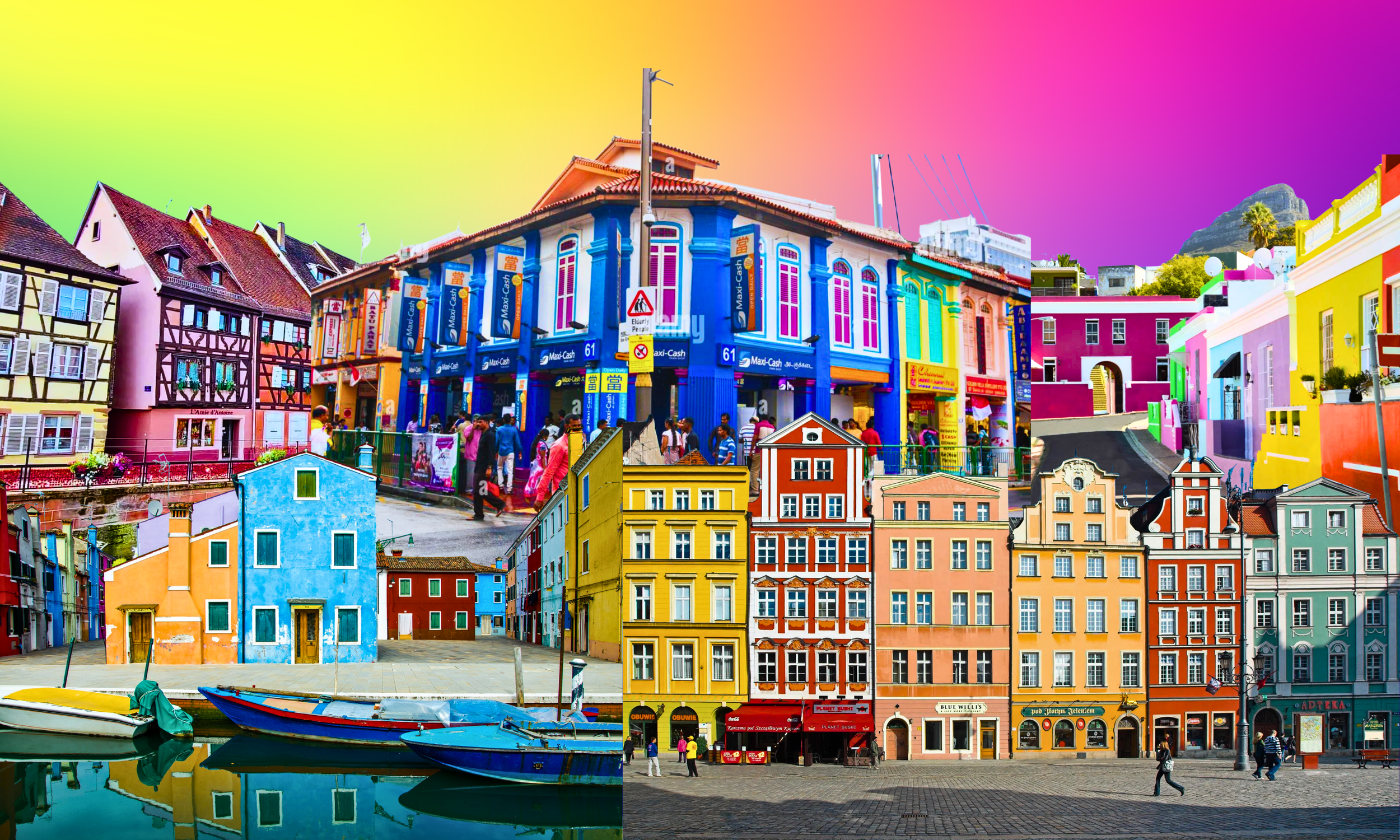
Warm hues such as crimson reds to citrus oranges tend to energize and draw focus, while cooler tones such as ultramarine blues to veridian greens mesmerize and calm — proving that color plays a powerful role in shaping our emotions, behavior, and perception.
“Life is a sea of vibrant color. Jump In,” A.D. Posey.
Every city, town, or region across the globe has a signature color palette that properly reflects its community, traditions, and local history.
The first invented pigments – a mixture of animal fat, burnt charcoal, soil, and chalk producing a basic palette of 5 colors: red, yellow, brown, black, and white - were used by humans over 40,000 years ago in cave paintings and burial rituals.
In ancient civilizations, colors were linked to status and spirituality. Egyptian artists used specific pigments to symbolize rebirth, life, or protection and medieval artists used color to communicate Biblical meaning to illiterate populations.
During the Renaissance, new pigment trade routes expanded artistic expression. In the 19th century, industrial chemistry revolutionized fashion and art with the first synthetic dyes.
Soon after people began experimenting and theorizing the origins of color. First came Aristotle who claimed the belief that all colors came from mixing black and white (aka: light and dark).
Then in the 1660s, Isaac Newton used a prism to prove that white light contains a spectrum of colors (ROYGBIV) which led to the invention of the color wheel (Red, Yellow, and Blue – the primary colors).
Goethe and others challenged Newton with experimental theories and artists developed new pigments, surpassing the muddied natural mixes.
More than just aesthetics, today color exists as an architectural language to guide movement, reflect cultural heritage, and highlight national, regional, or personal identity. This intentional use of color is most evident in these unique and super-saturated regions:
Istanbul, Turkey
Color is its most obvious in the tiles, markets, mosques, and neighborhoods of Istanbul, Turkey. Within this region - deep blues, bright golds, and radiant reds - hold a sacred meaning and serves to reflect Istanbul’s role as the intersection of Eastern and Western cultures. Color mosaics, tiles, and painted wooden houses reflect Ottoman artistic traditions.

Image Source: Heritage Travel Instagram
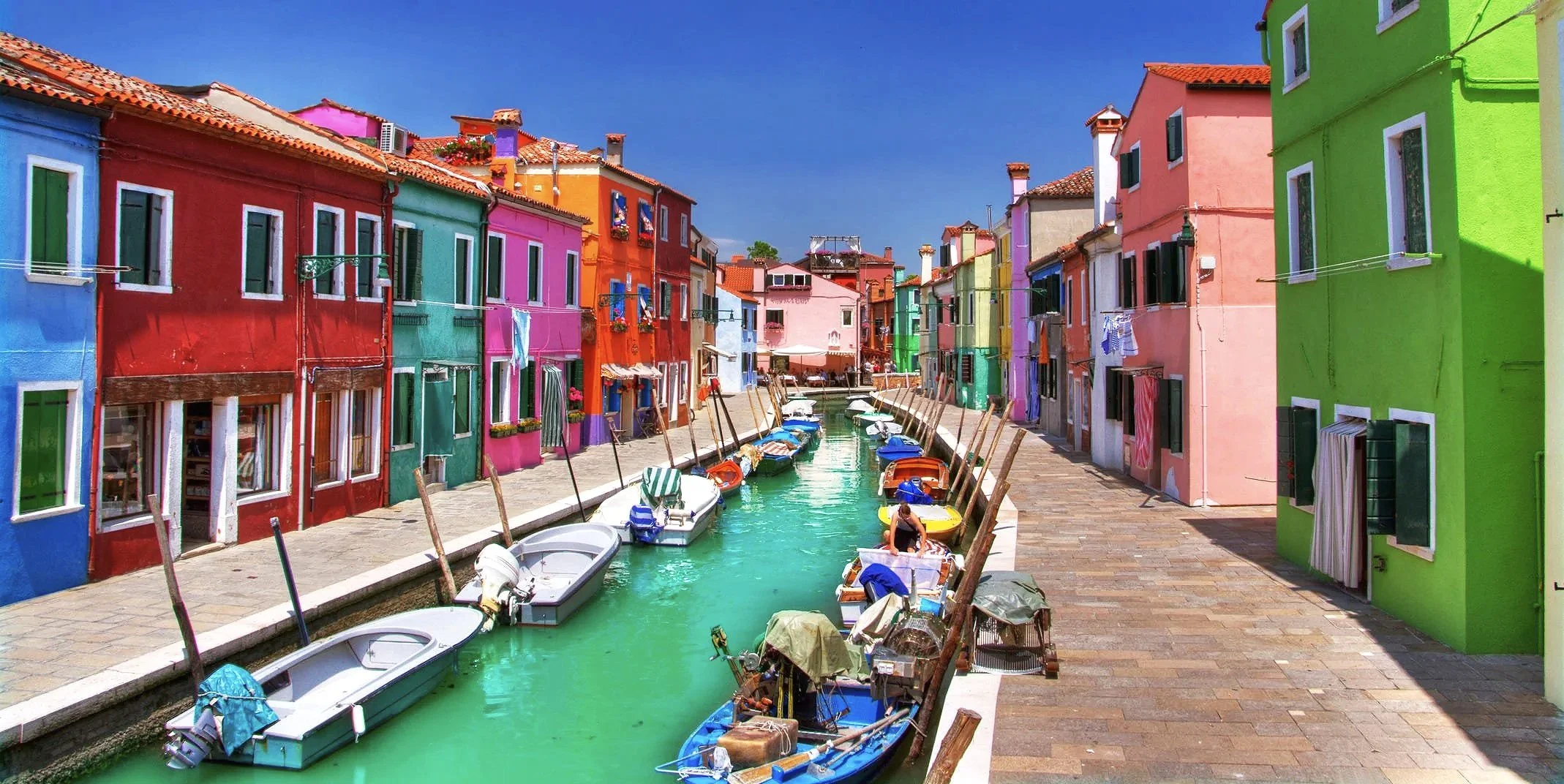
Burano, Venice, Italy
Where the bright colors help fishermen find their way home through fog on the lagoon. Today, this small colorful island’s saturated palette has become a cultural signature, making this destination a playful and welcoming character.
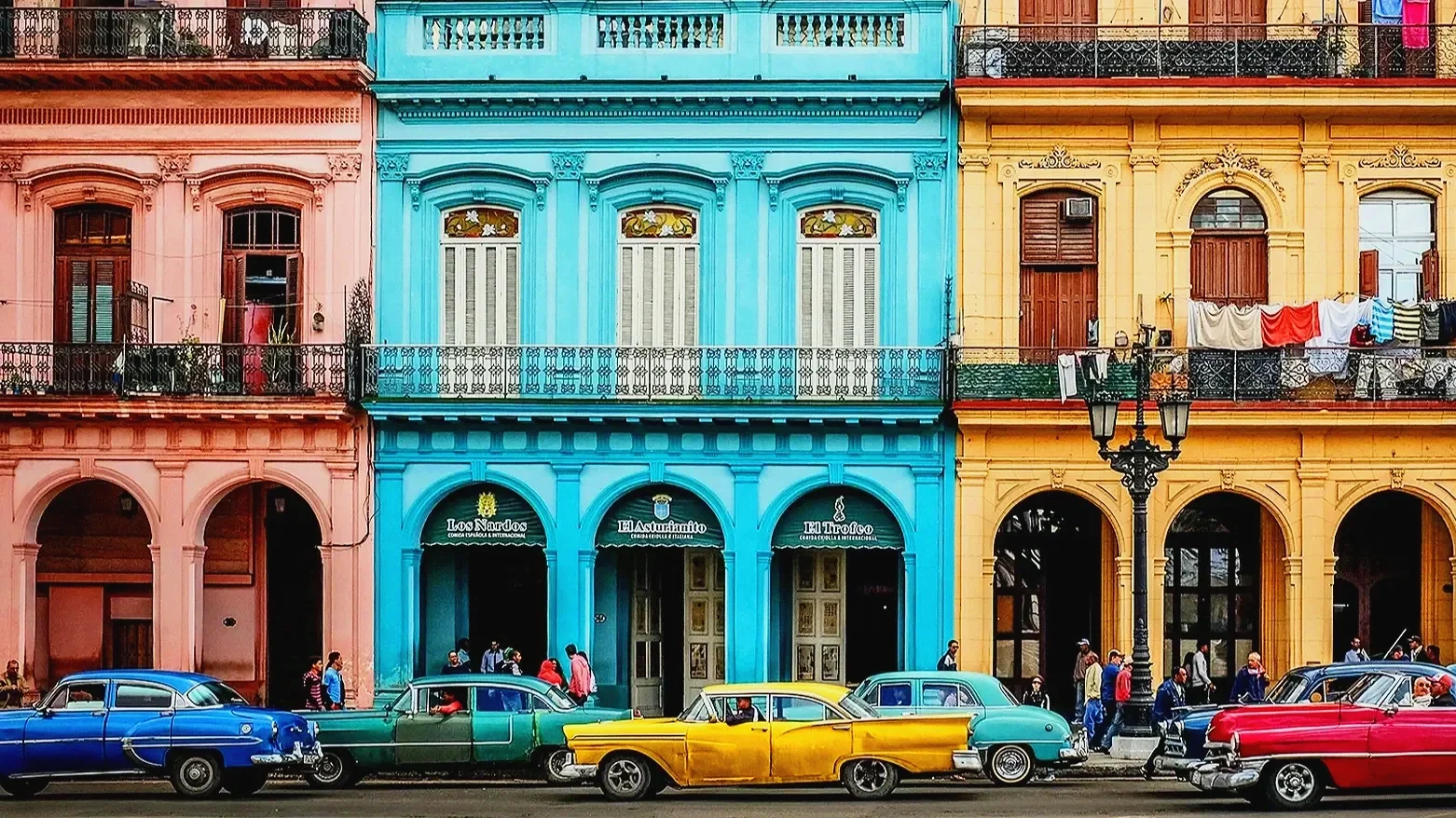
Old Havana, Cuba
Bright pastel-colored buildings reflect the aesthetics of colonial era, warmth and resilience of Cuban culture, and tropical Caribbean light. Despite periods of economic difficulties, restoring the color of their buildings has become a symbol of heritage, pride, and revival.
Colmar, France
Half-timbered houses are painted in soft pastel hues that reflect medieval color-coding practices (which indicated function or ownership). Today these homes convey fairy-tale charm, regional pride, and historic connection.

Image Source: France Guide
Jaipur, India
Seas of terracotta and blush shades cover this bustling city, earning Rajasthan’s capital the nickname Pink City. Much of the city’s rosy hue comes from the natural sandstone used to build many of its renowned landmarks such as the jaw-dropping, honeycomb palace, Hawa Mahal. Many of the other buildings in the city were painted to match the orangey-pink hue in 1876 for a visit from Prince Albert and Queen Victoria.

Image Source: The Times Travel
Las Palmitas, Pachuca, Mexico
This Mexican hillside neighborhood was once impoverished with high crime rates. That was until a group of government-funded artists, led by Enrique Gómez, began to turn the cluster of homes into a giant work of art while helping the locals find jobs.
The muralists and residents worked together to paint 209 buildings in swirling patterns, with a few also displaying portraits of the locals. Since the mural's completion, the small Mexican neighborhood has risen to international fame, as well as turned into a place filled with community spirit.

Image Source: Expedia
Bo-Kaap in Cape Town, South Africa
In the 1760s the rental homes in this region were built for enslaved people from Malaysia, Indonesia, and across Africa by Dutch colonialists. At the time, the leases required all houses to be painted white, but once the inhabitants were able to buy and own property, they painted the homes vibrant shades as an expression of freedom.

Image Source: Wikipedia
Peranakan Houses, Singapore
The history of Singapore’s Peranakan culture dates back to the 15th century, when Chinese immigrants began settling in the then-Malaya and worked as traders.
As the area developed, merchants began showcasing their wealth by decorating their shops with colorful motifs and intricate tiles.
Today this region is a candy colored wonderland celebrating the rich culture and traditions of the Peranakan people.

Image Source: Trip Advisor
Chefchaouen, Morocco
The Blue Pearl of Morocco where every building and alleyway of this former fortress town in the Rif Mountains is covered in a charming blue tones.
Some say the city was painted blue by Jewish refugees from Spain in the 1930s to reflect the divine, while others believe it represents the color of the sea and keeps mosquitos away.

Guatapé, Colombia
Residents and shop owners often decorate their home facades in fresco-like panels, depicting anything from colorful flowers to adorable animals to sweet treats on the bakery doors. It’s unclear exactly when and why the tradition had started but that hasn’t stopped the city from preserving its winding rainbow streets that feel straight out of a storybook.
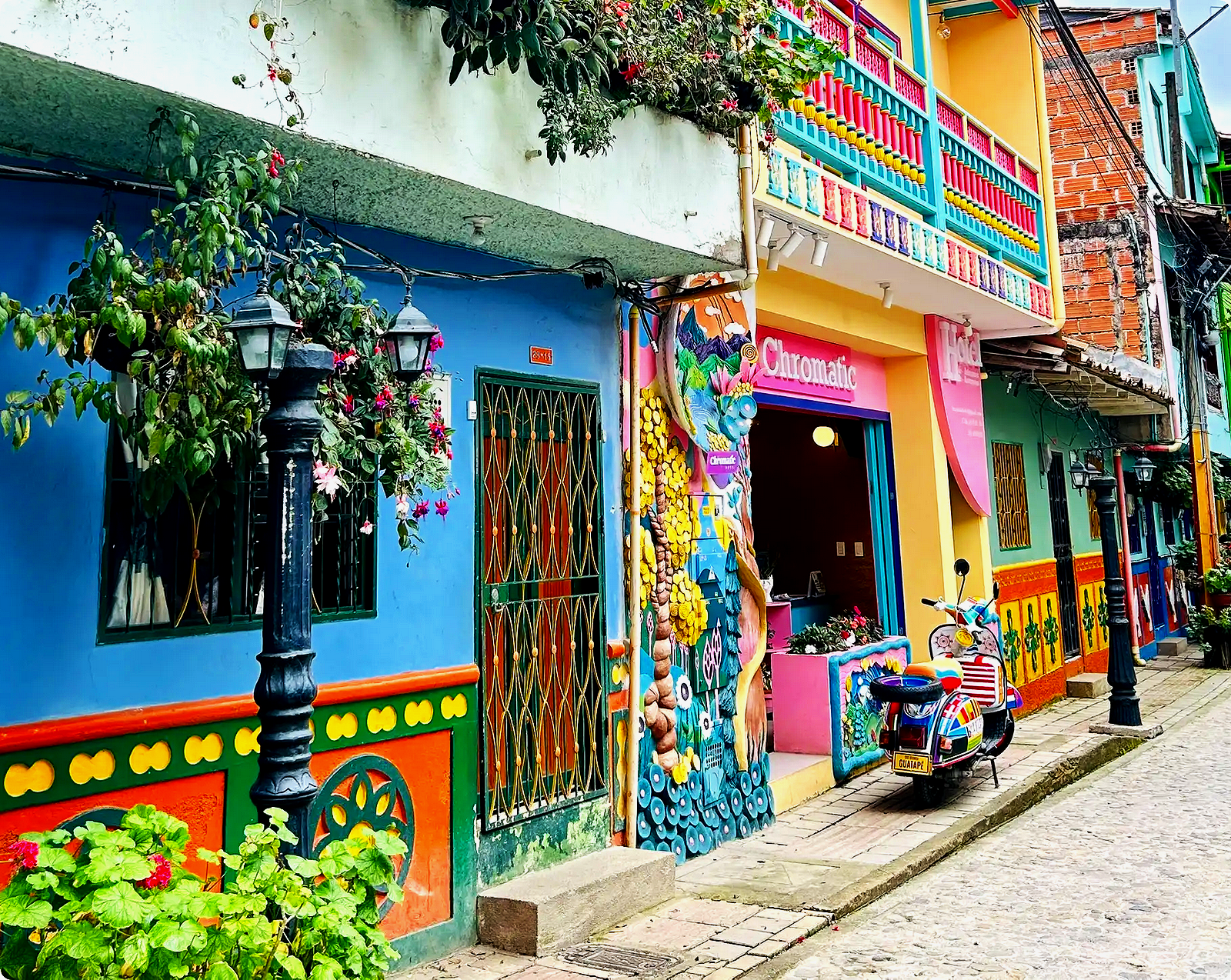
Image Source: Flora Travel