The Language of Color


Long before we remember street names or landmarks, we remember the deep blues of Chefchaouen, the pink facades of Jaipur, or the vibrant houses of Burano. Color is more than decoration. It is a cultural language—one that communicates history, identity, memory, and belonging.

Warm hues such as crimson reds to citrus oranges tend to energize and draw focus, while cooler tones such as ultramarine blues to veridian greens mesmerize and calm — proving that color plays a powerful role in shaping our emotions, behavior, and perception.

Every city, town, and region develops a visual identity of its own. Whether intentionally or organically, distinctive color palettes emerge from local traditions, natural environments, available materials, and cultural values. Over time, these colors become inseparable from the places themselves.

Around the world, communities have used color for remarkably different reasons. Some colors emerged from faith, others from trade, survival, celebration, or political change. Together, they reveal how color becomes a living record of culture.


“Life is a sea of vibrant color. Jump In,” A.D. Posey.


HISTORY OF COLOR

Humanity’s relationship with color stretches back tens of thousands of years. Some of the earliest known pigments—made from charcoal, earth, chalk, and animal fats—produced a simple palette of red, yellow, brown, black, and white.

These colors appeared in prehistoric cave paintings, ceremonial objects, and burial rituals, demonstrating that even our earliest ancestors used color not merely for decoration, but as a means of expression, communication, and cultural meaning.


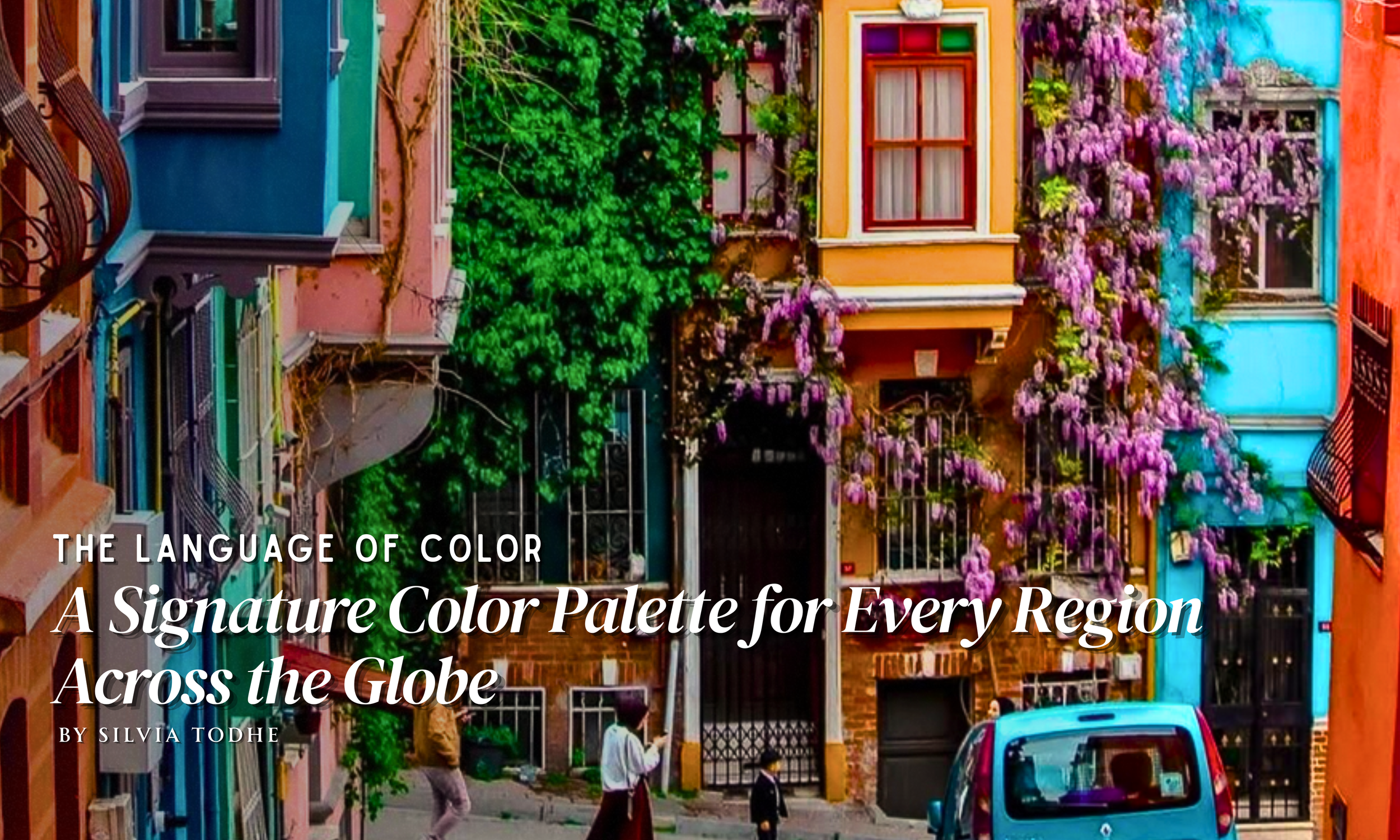
Istanbul, Turkey

Nowhere is color more evident than in the tiles, markets, mosques, and neighborhoods of Istanbul. Within this region - deep blues, bright golds, and radiant reds - hold a sacred meaning and serves to reflect Istanbul’s role as the intersection of Eastern and Western cultures. Color mosaics, tiles, and painted wooden houses reflect Ottoman artistic traditions.

Image Courtesy of Heritage Travel Instagram

Burano, Venice, Italy

Where the bright colors help fishermen find their way home through fog on the lagoon. Today, this small colorful island’s saturated palette has become a cultural signature, making this destination a playful and welcoming character.
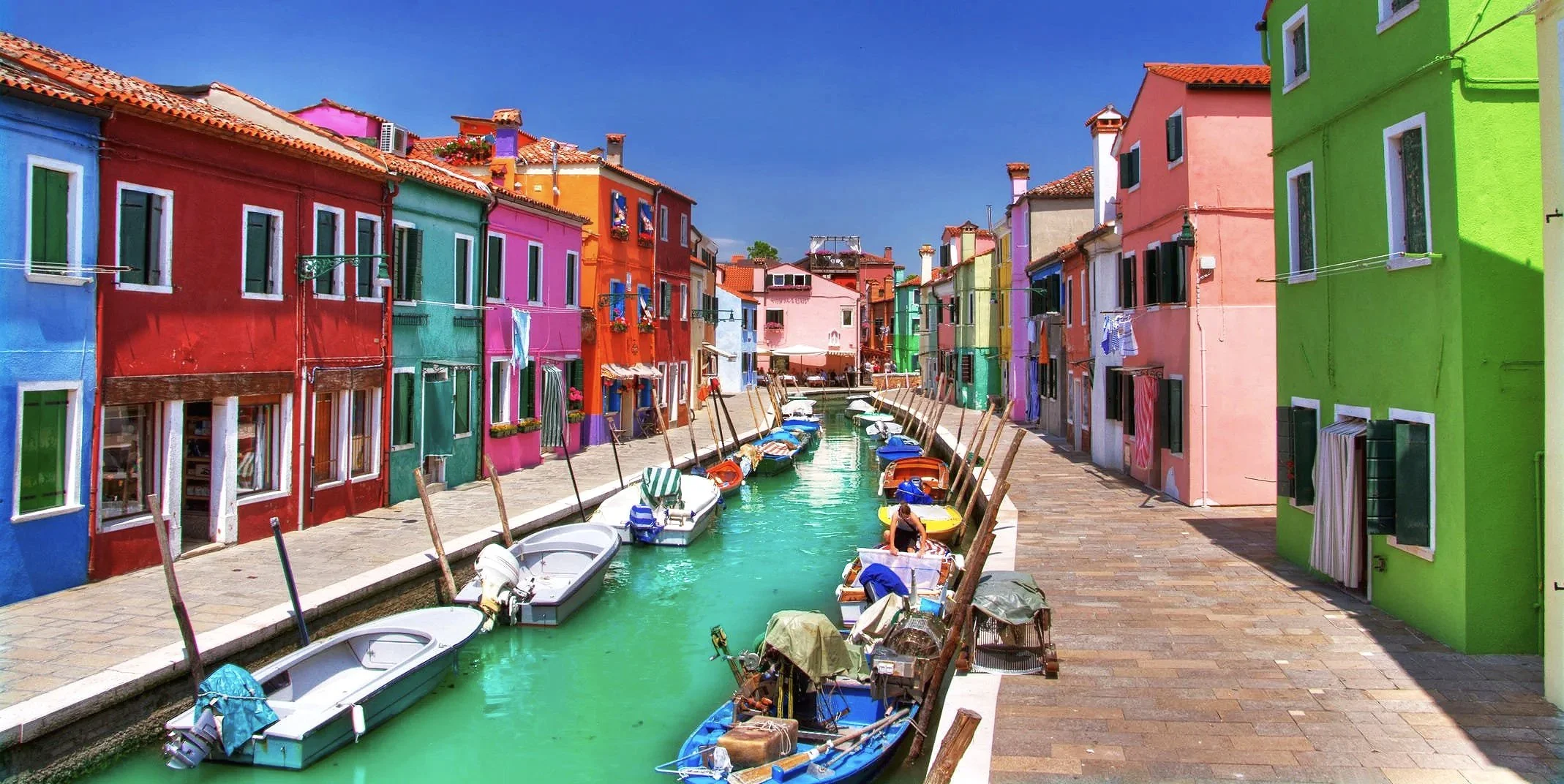
Image Courtesy of Prima UK Travel

Old Havana, Cuba

Bright pastel-colored buildings reflect the aesthetics of colonial era, warmth and resilience of Cuban culture, and tropical Caribbean light. Despite periods of economic difficulties, restoring the color of their buildings has become a symbol of heritage, pride, and revival.
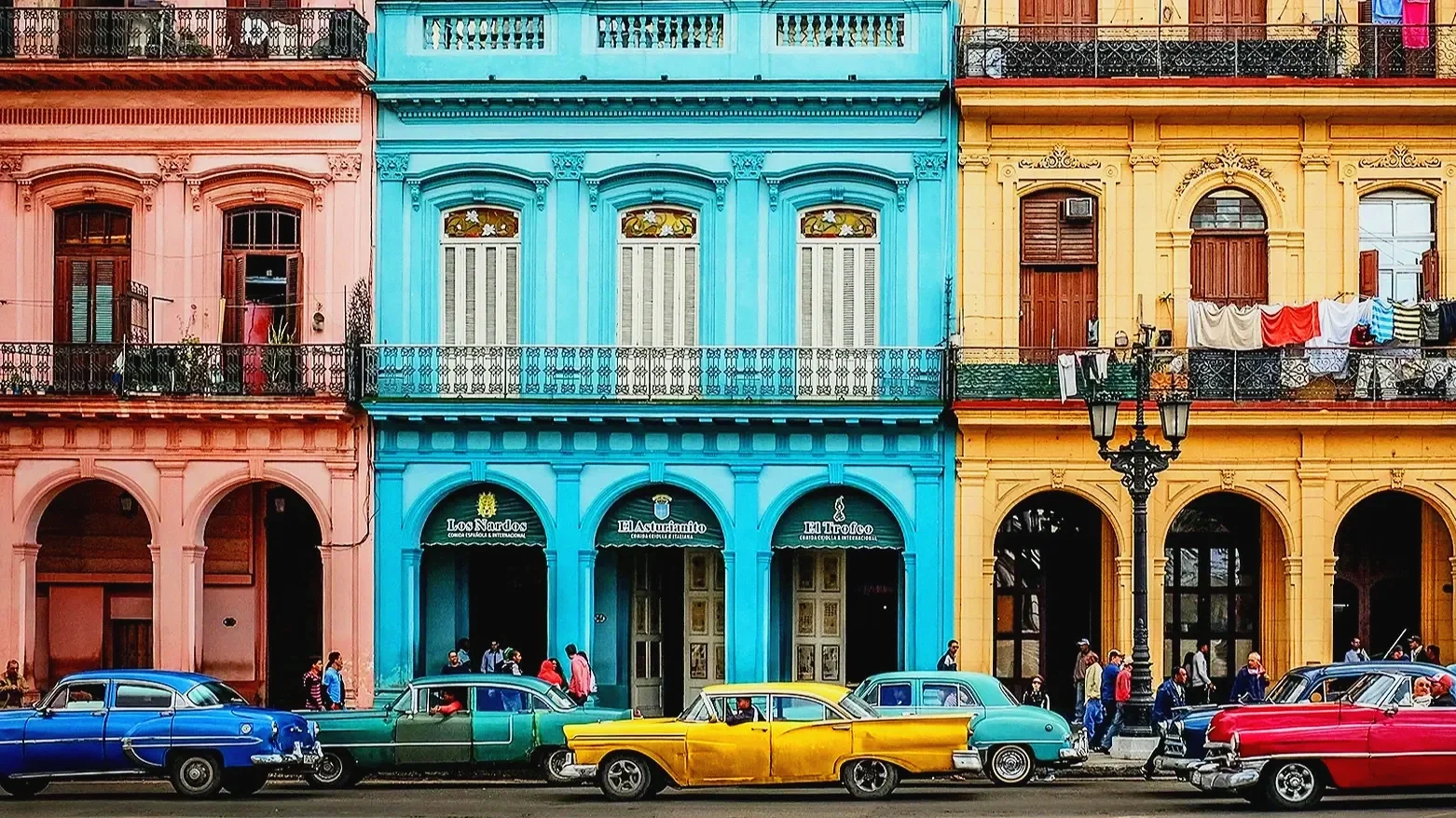
Image Courtesy of Eat Live Travel Drink

Colmar, France

Half-timbered houses are painted in soft pastel hues that reflect medieval color-coding practices (which indicated function or ownership). Today these homes convey fairy-tale charm, regional pride, and historic connection.

Image Courtesy of France Guide

Jaipur, India

Seas of terracotta and blush shades cover this bustling city, earning Rajasthan’s capital the nickname Pink City. Much of the city’s rosy hue comes from the natural sandstone used to build many of its renowned landmarks such as the jaw-dropping, honeycomb palace, Hawa Mahal. Many of the other buildings in the city were painted to match the orangey-pink hue in 1876 for a visit from Prince Albert and Queen Victoria.

Image Courtesy of The Times Travel

Las Palmitas, Pachuca, Mexico

This Mexican hillside neighborhood was once impoverished with high crime rates. That was until a group of government-funded artists, led by Enrique Gómez, began to turn the cluster of homes into a giant work of art while helping the locals find jobs.

The muralists and residents worked together to paint 209 buildings in swirling patterns, with a few also displaying portraits of the locals. Since the mural's completion, the small Mexican neighborhood has risen to international fame, as well as turned into a place filled with community spirit.

Image Courtesy of Expedia

Bo-Kaap in Cape Town, South Africa

In the 1760s the rental homes in this region were built for enslaved people from Malaysia, Indonesia, and across Africa by Dutch colonialists. At the time, the leases required all houses to be painted white, but once the inhabitants were able to buy and own property, they painted the homes vibrant shades as an expression of freedom.

Image Courtesy of Wikipedia

Peranakan Houses, Singapore

The history of Singapore’s Peranakan culture dates back to the 15th century, when Chinese immigrants began settling in the then-Malaya and worked as traders. 

As the area developed, merchants began showcasing their wealth by decorating their shops with colorful motifs and intricate tiles.

Today this region is a candy colored wonderland celebrating the rich culture and traditions of the Peranakan people.

Image Courtesy of Trip Advisor

Chefchaouen, Morocco

The Blue Pearl of Morocco where every building and alleyway of this former fortress town in the Rif Mountains is covered in a charming blue tones.

Some say the city was painted blue by Jewish refugees from Spain in the 1930s to reflect the divine, while others believe it represents the color of the sea and keeps mosquitos away.

Image Courtesy of Blue Door Cuisine

Guatapé, Colombia

Residents and shop owners often decorate their home facades in fresco-like panels, depicting anything from colorful flowers to adorable animals to sweet treats on the bakery doors. It’s unclear exactly when and why the tradition had started but that hasn’t stopped the city from preserving its winding rainbow streets that feel straight out of a storybook.
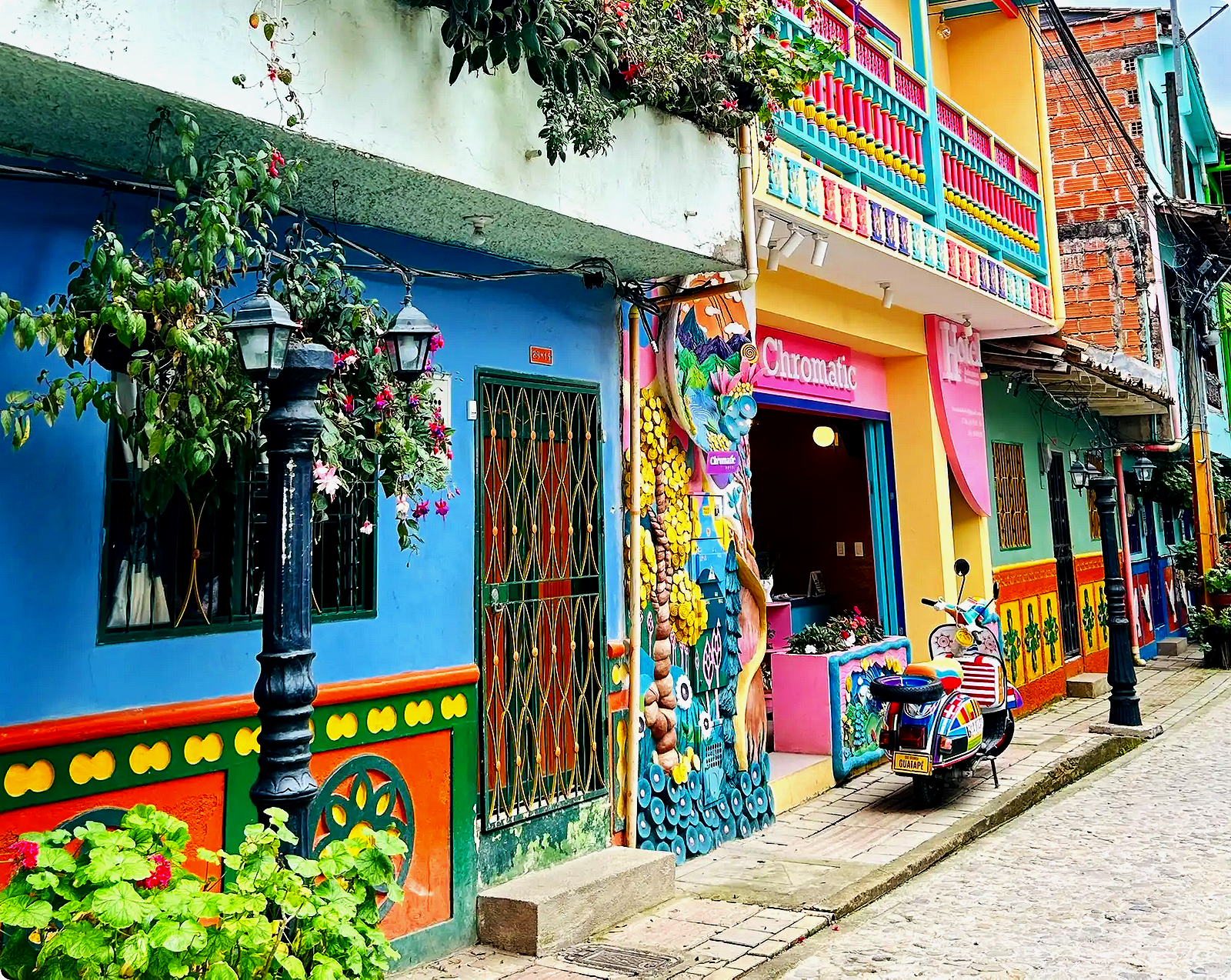
Image Courtesy of Flora Travel

REFLECTION

We often think of architecture as stone, brick, and design. Yet some of the world’s most memorable places are defined not by their structures alone, but by the colors that give those structures meaning. Color is not simply what we see. It is one of the ways cultures remember.
 

Americana


Why Does the American West Continue to Captivate Us? More than a century after the frontier closed, the imagery of the American West continues to shape fashion, film, music, art, and popular imagination.

Cowboy boots appear on runways. Western silhouettes return season after season. Contemporary artists reinterpret frontier landscapes, while musicians and filmmakers revisit the mythology of the West for new generations.

Why does a period of history that has long since passed continue to exert such influence on culture today? The answer may lie not in the West itself, but in what it represents.

The Myth of the Frontier

Americana spirit is the belief that change is possible, life can be made better, and that the individual has agency. It is founded upon three fundamental traits: Individualism (belief that each person has the right and duty to shape their own life), Idealism (idea that society can be improved and obstacles are challenges to overcome), and Frontier Mentality (their early settlers constantly pushed into unknown territory). Is it any wonder that the Wild West – the ultimate symbol of the spirit of Americana - would have such an enduring influence on culture?

Fashion as Cultural Memory

Of all the forms of creative human expression – none has been championing the untamed spirit of 19th Century America and its rich cultural legacy since its origins or most consistently than the field of fashion. How did clothing preserve the image of the West long after the frontier disappeared?

Western Wear began as collection of durable but comfortable clothing designed to withstand the harsh conditions of the Wild West. The basics included: a wide-brimmed hat, an ordinary shirt, cowboy vest, cotton or wool pants, leather caps, boots with spurs, and handkerchief around the neck.

Men weren’t the only ones with riding and roping skills – women spent just as much time on the ranch and were just as skilled. They also required practical clothing for their daily routines to the point where they began wearing their husbands, fathers, and brothers’ clothes.

With the introduction of the Wild West in the 1900s, split skirts became increasingly common among western women. This fashion item liberated them to compete with men in various events.

Then in 1910, icons such as Annie Oakley, Calamity Jane, and other women from the Wild West began paving the way for the future of cowgirls’ fashion. This functional attire gradually transformed into a distinctive fashion style recognized worldwide.

Americana in Contemporary Culture

The mythology of the American West continues to evolve rather than disappear. Fashion houses reinterpret cowboy silhouettes, musicians reinvent Western iconography, filmmakers revisit frontier narratives, and contemporary painters imagine the landscape anew. Together they demonstrate that Americana is not frozen in history—it remains an active cultural language.

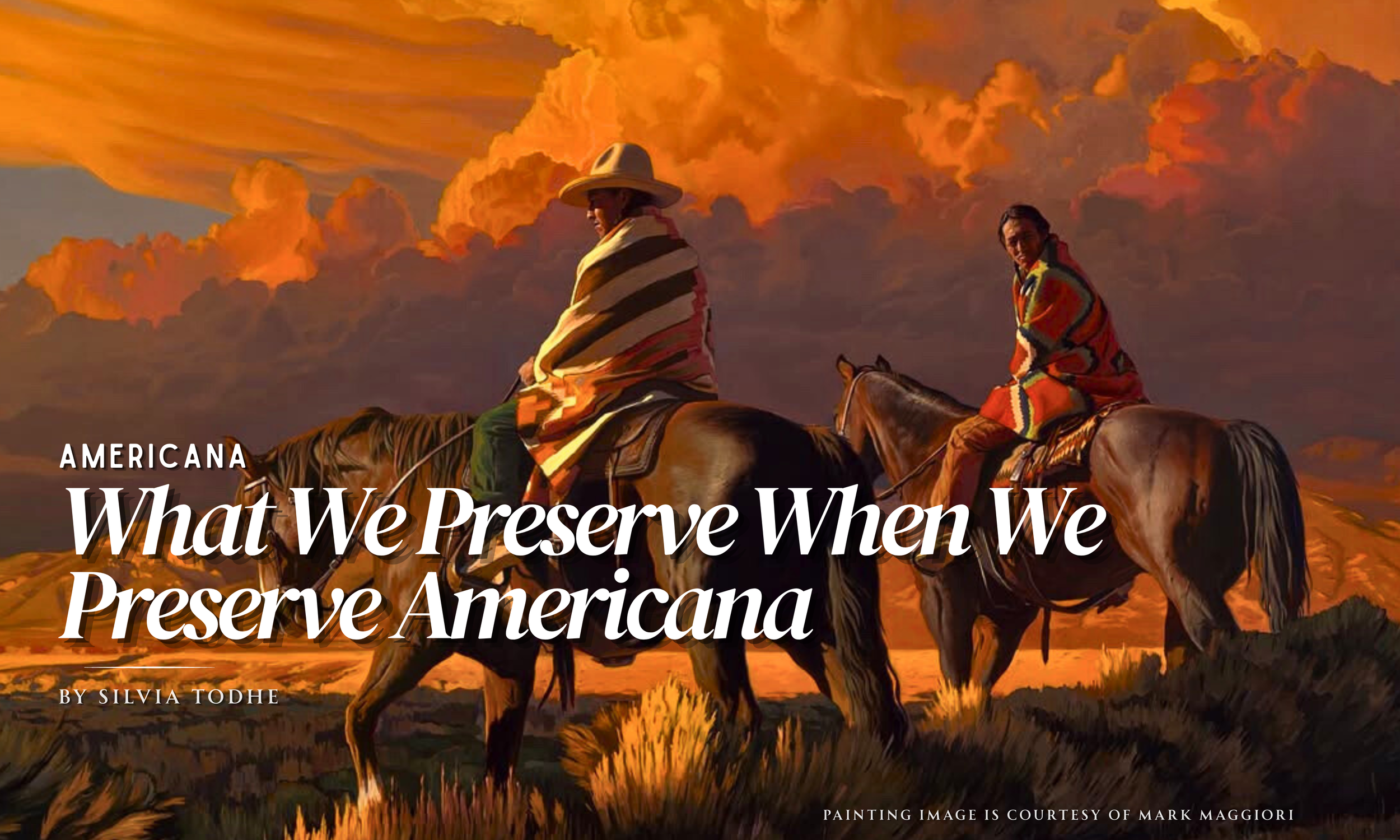
It has inspired fashion, film, literature, music, and visual art alike with recent appearances in pop culture such as ‘Barbie’ Movie (2024) featuring Margot Robbie and Ryan Gosling [Film], Pharrell Williams’ Louis Vuitton Runway Collection Debut [Fashion], Beyonce’s most recent album ‘Cowgirl Carter’ and tour [Music & Entertainment], and Western Landscape Oil Painter Mark Maggioni & Will Cotton’s inspired interpretations of cowboys and girls of the Old West [Arts].

What We Preserve When We Preserve Americana

The enduring popularity of Western fashion is not simply about boots, hats, or denim. It reflects our tendency to preserve cultural myths through objects, stories, images, and design. Long after historical realities fade, symbols remain.

The American West survives not because people remember every detail of its history, but because each generation continues to reinterpret what it represents.

In this way, Western fashion functions much like a museum collection, historic landmark, or archival manuscript. It preserves a story that societies continue to revisit in search of meaning.


The Artist’s Faithful Companion


Throughout history dogs have provided humans with unconditional love, unwavering devotion, and divine companionship. Is it any wonder that they would appear in some of history’s greatest works of art?

Far from being a modern phenomenon, artists have depicted dogs for thousands of years. One notable 20th-century example is Pablo Picasso, whose beloved Dachshund, Lump, frequently appeared in his drawings and paintings, demonstrating that even history’s greatest artists found inspiration in canine companionship.

HISTORY & SYMBOLISM

The very first artwork to depict canines were discovered in cave paintings, symbolizing protection and companionship.

In Ancient Egypt dogs signified guardianship, intuition, and the bridge between life and death.

Lapdogs served as an allegory for faithfulness, fidelity, and high social standing during the Renaissance and European portraiture.

Images of dogs were carved on tombstones - most notably during the Middle Ages - represented the deceased’s feudal loyalty.

During the 16th and 17th century when only nobility were allowed to hunt, paintings of hunting scenes featured dogs communicated high social status and aristocracy.

Overseas in Japan (the Edo Period, 1615 - 1868), miniature sculptures called ‘netsuke’ served as artistic works and as toggles for cords used to attach small objects, boxes, or pouches to kimonos (traditionally have no pockets) were very popular.

This means that from cave paintings to Ancient Egypt to the 17th century to today - man’s best friend has been making an appearance in art for over 30,000 years.

The Artist’s Faithful Companion

Dogs have never been merely decorative subjects. Across cultures and centuries they have symbolized loyalty, protection, companionship, nobility, and devotion.

Artists have returned to them not simply because they loved dogs, but because dogs communicate some of humanity’s most enduring values.


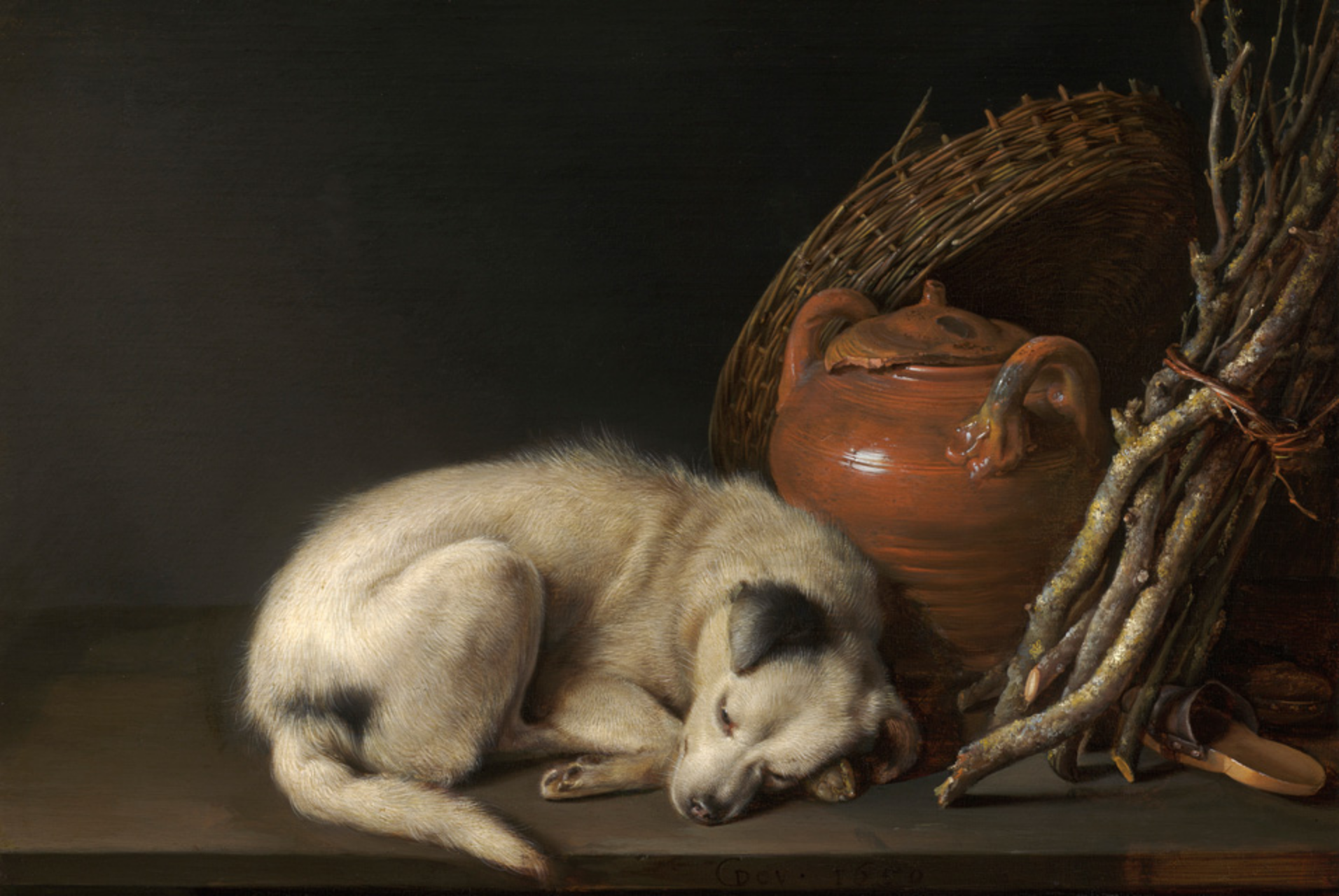
Gerrit Dou, Sleeping Dog, 1650, Museum of Fine Art, Boston, MA, USA.

Paul Gauguin, Still Life with Three Puppies, 1888, Museum of Modern Art, New York City, NY, USA.

George Stubbs, White Poodle in a Punt, c. 1780, National Gallery of Art, Washington, DC, USA.

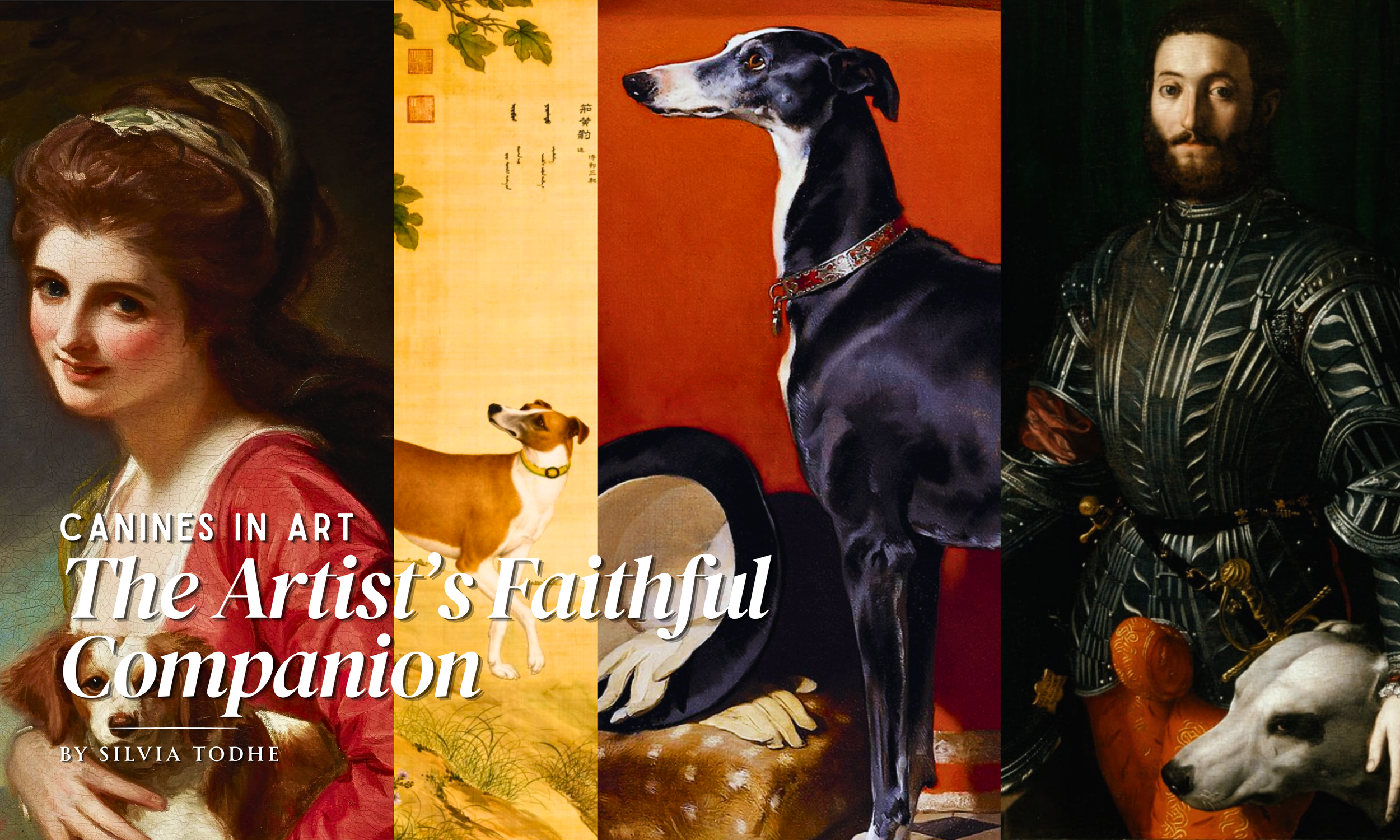
Giuseppe Castiglione, Tawny Yellow Leopard, 1747, National Palace Museum, Taipei, Taiwan.

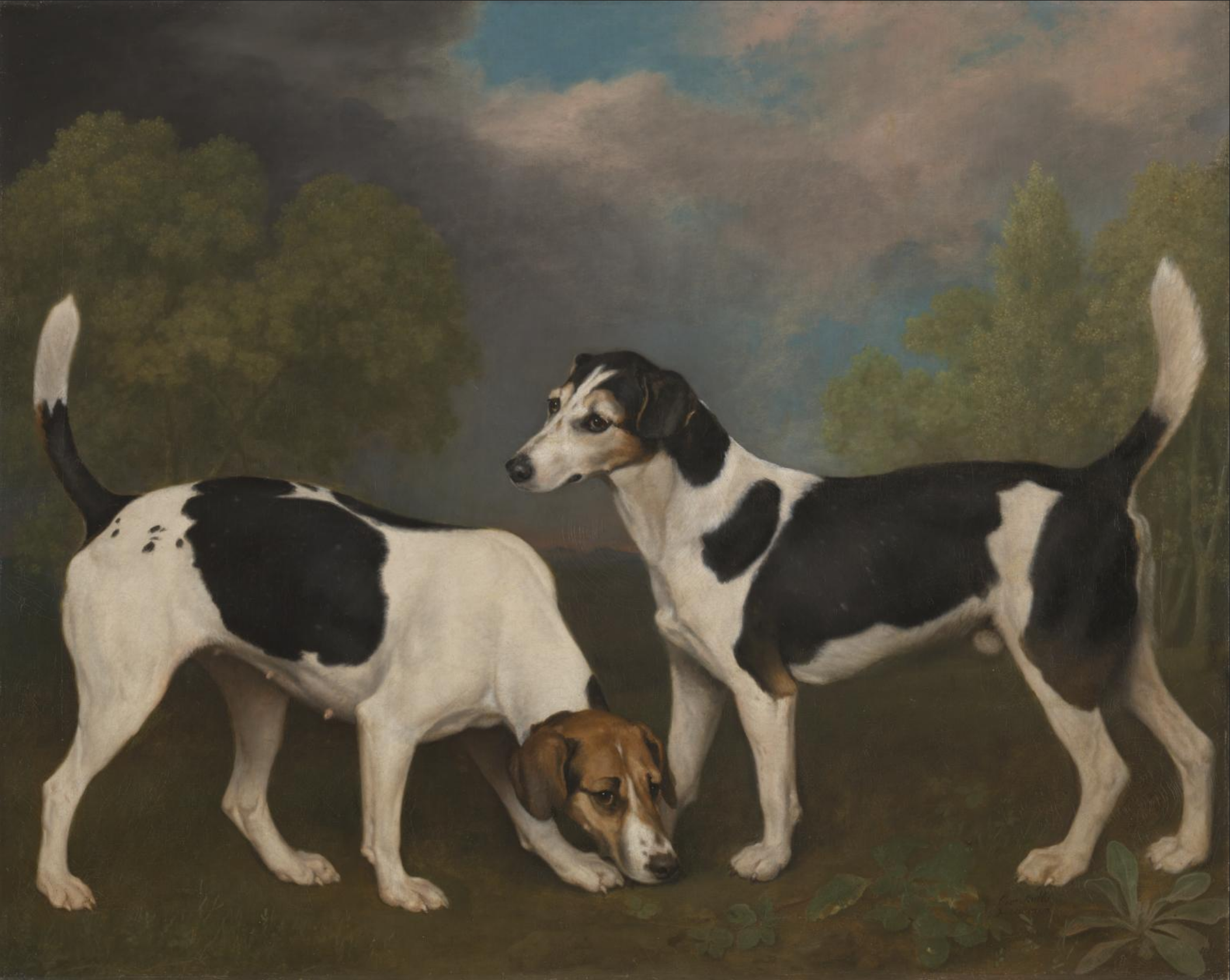
George Stubbs, A Couple of Foxhounds, 1792, courtesy the Tate

Sir Edwin Henry Landseer, Eos, A Favorite Greyhound of Prince Albert, 1841, courtesy Royal Collection.

Mary Cassatt, Little Girl in a Blue Armchair (1878).
Courtesy National Gallery of Art, Washington, DC.

Edward Hopper, Cape Cod Evening (1939).
Courtesy the National Gallery of Art, Washington, DC.

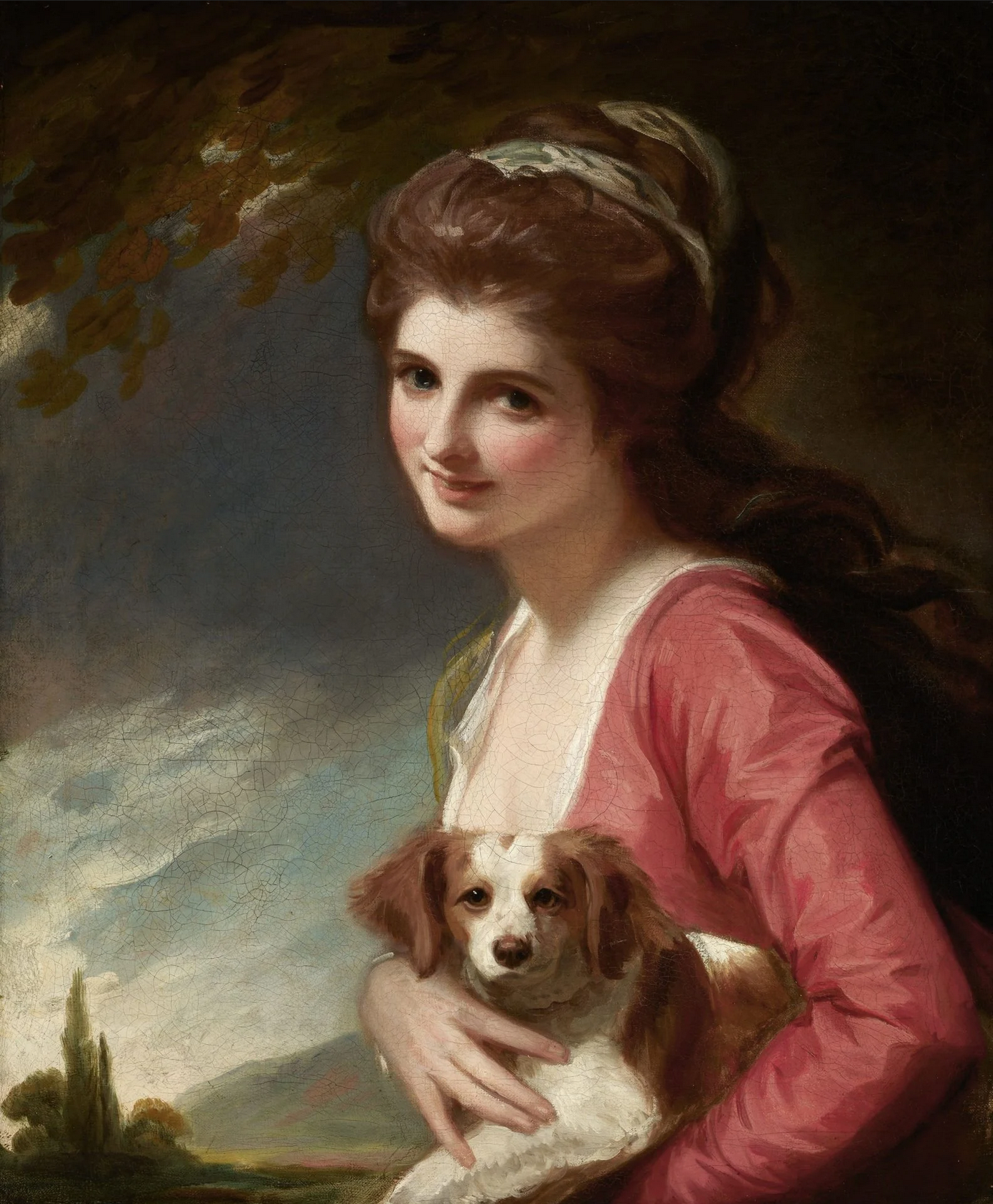
George Romney, Lady Hamilton as Nature (1782). Courtesy the Frick Collection, New York.

Agnolo Bronzino, Guidobaldo della Rovere (1531–32).
Courtesy Palazzo Pitti, Florence.


An Artists Home & Life: A Constant State of Wonder


While most people designate a corner of their home as their creative sanctuary, the world’s most famous artists dedicate their whole house to their craft.

Everyone has had that moment where they encounter a work of art so personally moving and awe-inspiring that it forever alters their perspective — and subsequently their life.

Such an encounter is followed up by the one and only question the mind can muster - what was the artist thinking, feeling, doing at the time they conceived this masterpiece?

It was Sir Marcel Duchamp who noted, “the most interesting thing about artists is how they live.” This observation reveals that an artist’s life, choices, and being are just as crucial and fascinating as their work.  

Artists live in a constant state of wonder, finding beauty in everyday moments, and devoted to authentic self-expression. They understand that while art exists to reflect, interpret, and shape reality - it is life that provides the experiences, emotions, and inspiration that fuels artistic creation.

For artists, everyday is an opportunity not just to create beauty but to transform existence itself into a work of art. This mindful approach to living allows for exploration, creativity, and celebration of life.

Whether you are an established artist or someone who enjoys creative projects, you understand the importance of having a space devoted to your craft. It serves as a physical reminder of one’s commitment to craft and encourages setting aside time to create.

Art supplies, inspirational quotes, and anything that serves as personal inspiration – are just some elements incorporated into most people’s creative sanctuary but the world’s greatest artists?

They dedicated their whole house to their craft. Today these structures exist as museums offering insights into the lives of the greatest artists humanity has ever known.

In a world that often feels rushed and chaotic, finding peace through creativity can be a powerful way to nurture your mind and soul. Find your inspiration for an artist nook here:


CLAUDE MONET (IMPRESSIONISM) & GIVERNY, FRANCE

Oscar-Claude Monet was a French painter and founder of Impressionism who is seen as a key precursor to Modernism, especially in his attempts to paint nature as he perceived it.

During his long career, he was the most consistent and prolific practitioner of Impressionism's philosophy of expressing one's perceptions of nature, especially as applied to plein air (outdoor) landscape painting.

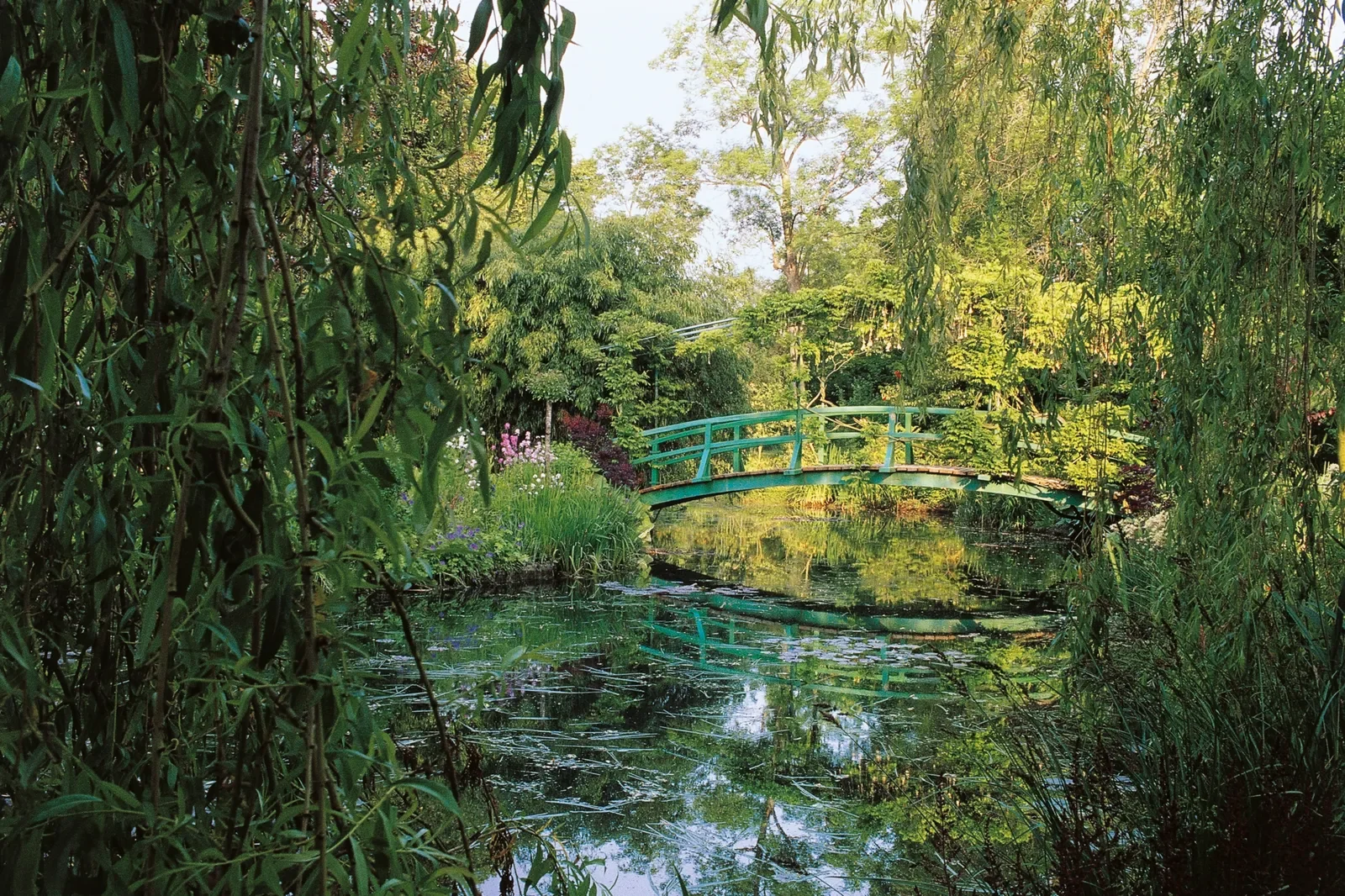
From 1883, Monet lived in Giverny, France where he purchased a house and property and began a vast landscaping project including the water-lily pond.

Monet's ambition to document the French countryside led to a method of painting the same scene many times so as to capture the changing of light and the passing of the seasons.

Frequently exhibited and successful during his lifetime, Monet's fame and popularity soared in the second half of the 20th century when he became one of the world's most famous painters and a source of inspiration for a burgeoning group of artists.

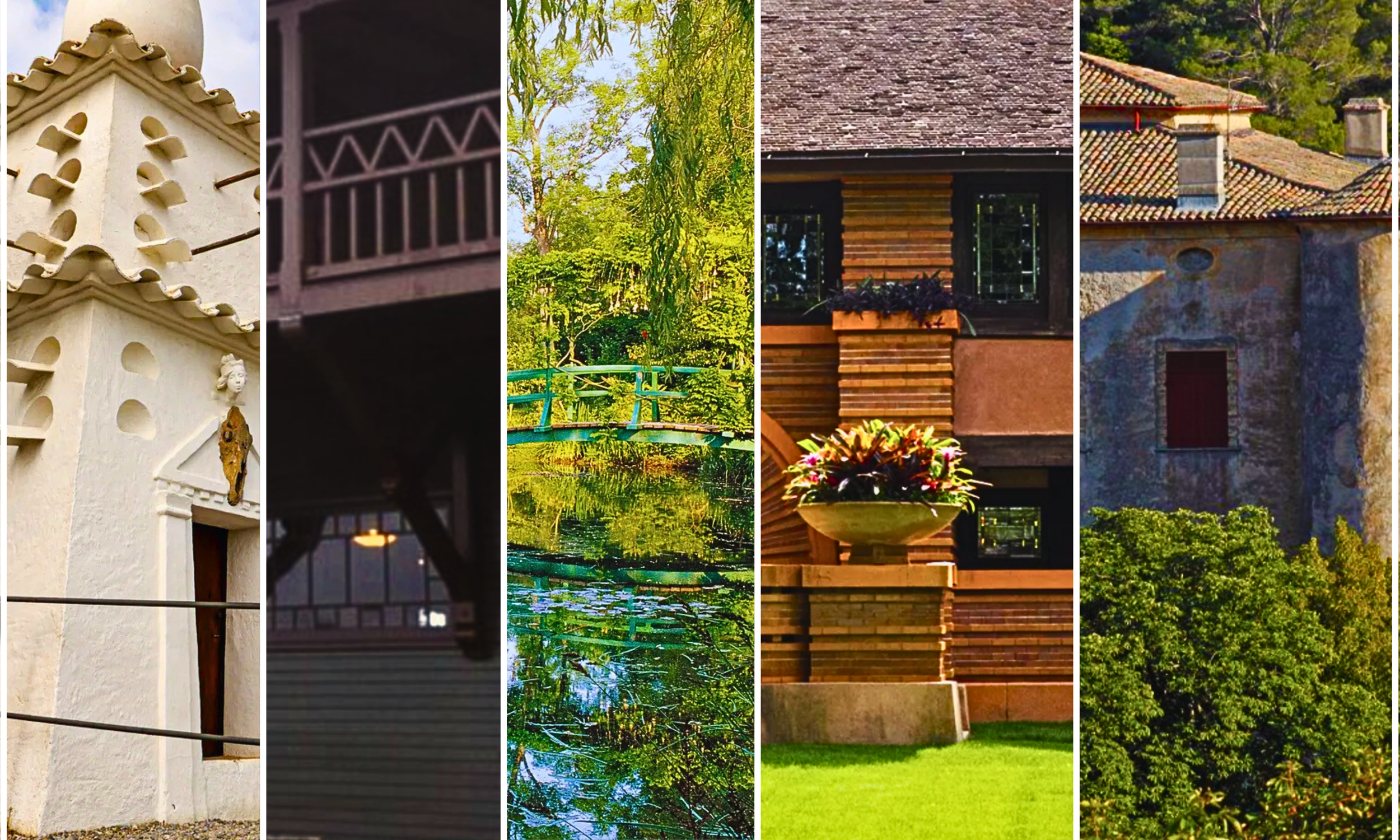
Claude Monet’s colorful house and famous water lily gardens in Giverny, France have since been preserved as Masion et Jardins de Claude Monet.

Getty Images

SALVADOR DALI (SURREALISM) & PORTLIGAT, SPAIN

Salvador Dali was a Spanish Surrealist artist renowned for his technical skill, precise draftsmanship, and the striking and bizarre images in his work.

Influenced by Impressionism and Renaissance masters, he was increasingly attracted to Cubism and Avant-Garde Art movements.

He moved closer to Surrealism in the late 1920s and joined the Surrealist group in 1929, soon becoming one of its leading exponents. His best-known work - The Persistence of Memory (August 1931).

Dalí's artistic repertoire included painting, sculpture, film, graphic arts, animation, fashion, and photography, at times in collaboration with other artists. He also wrote fiction, poetry, autobiography, essays, and criticism.

Major themes in his work include dreams, the subconscious, sexuality, religion, science and his closest personal relationships. To the dismay of those who held his work in high regard, and to the irritation of his critics, his eccentric and ostentatious public behavior often drew more attention than his artwork.

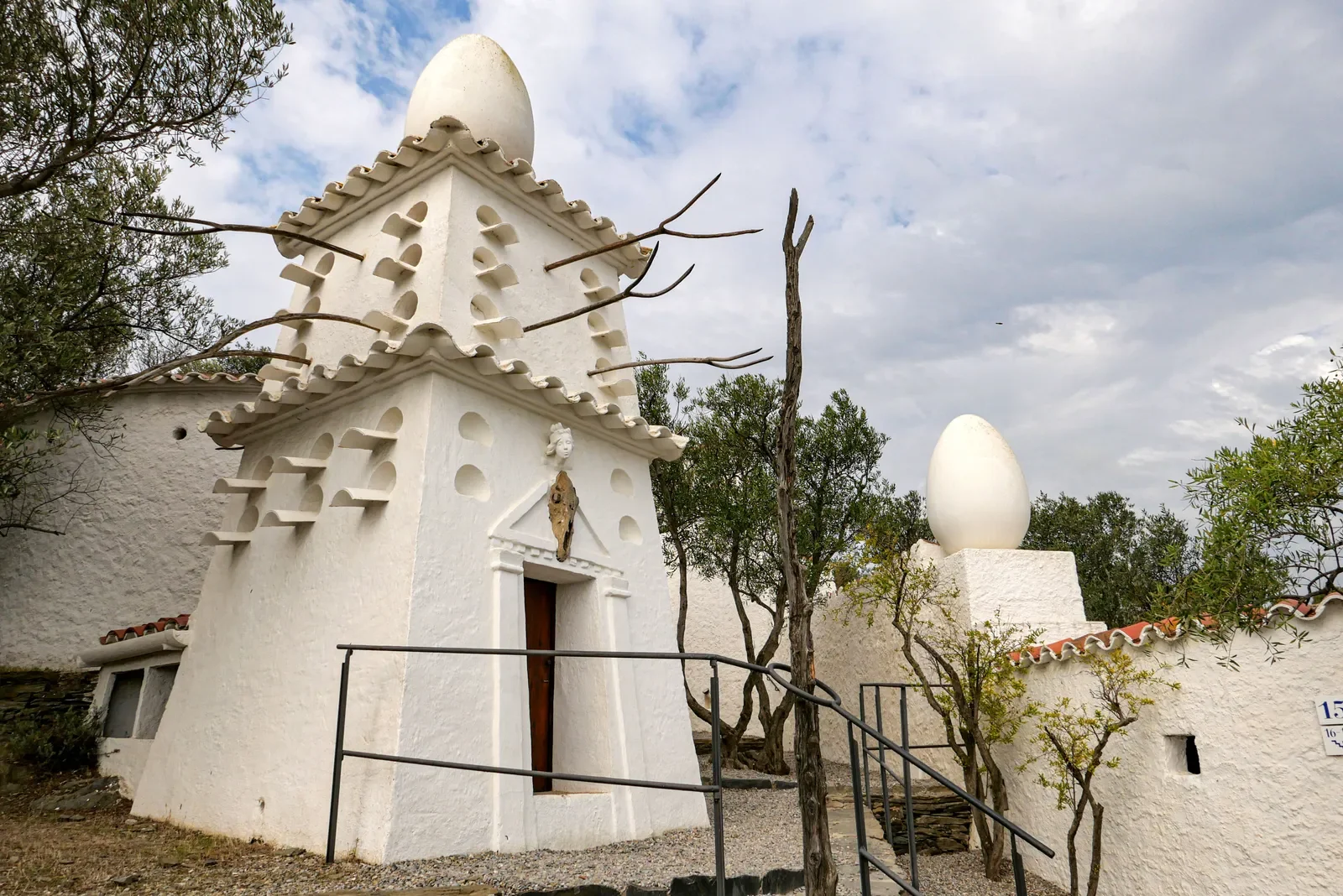
Salvador Dali’s whimsical, white sea shell, lobster-themed House Museum in Portlligat, Spain, was Dali’s home and studio.

The other major museum devoted to Dali’s work is the Salvador Dali Museum in St. Petersburg Florida, US.

Getty Images

FRIDA KAHLO (SURREALISM, MEXICAN MODERNISM) & COYOACAN, MEXICO CITY

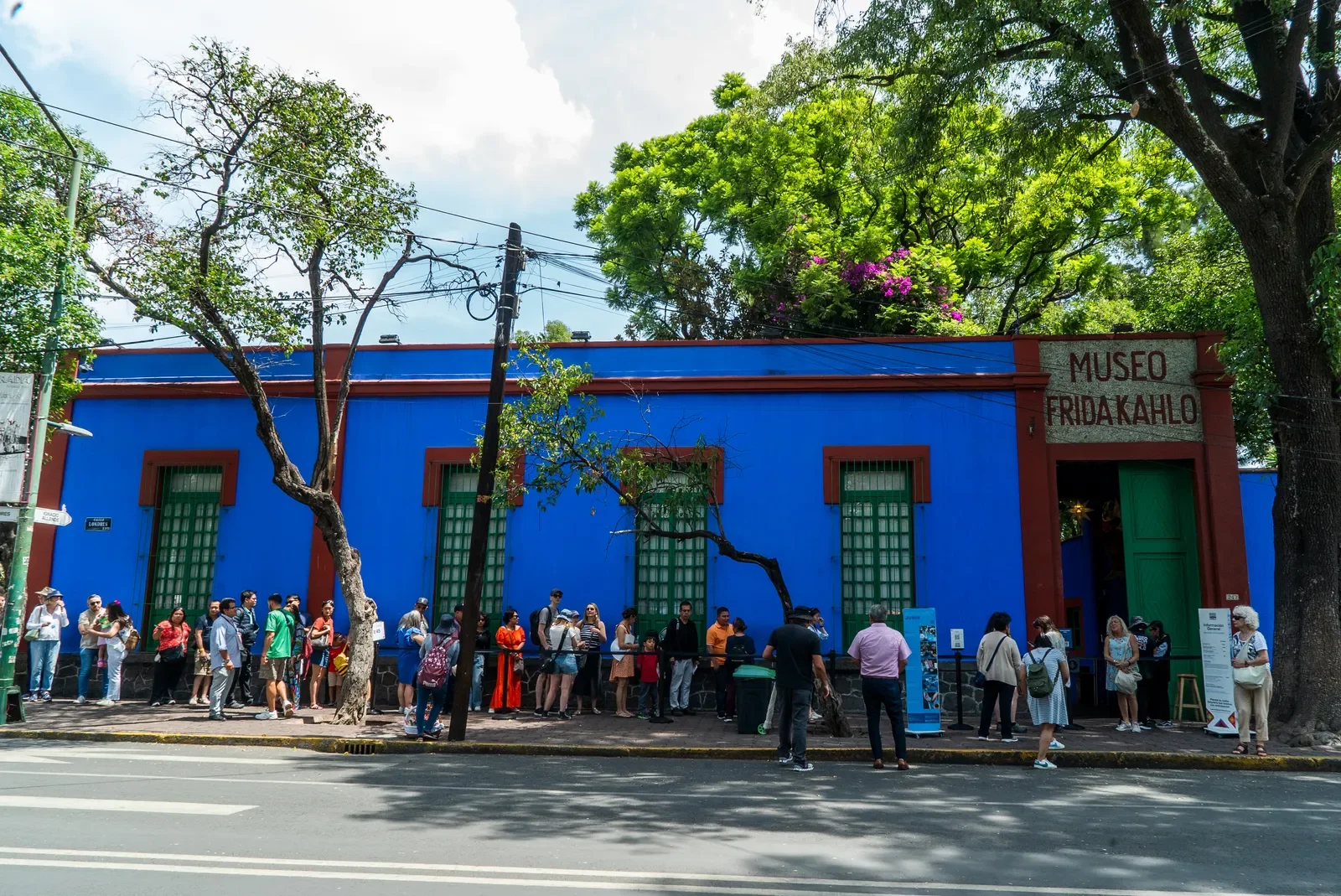
Frida Kahlo’s vibrant blue home, the Museo Frida Kahlo in Coyoacán, Mexico City, is a powerful testament to her life and reflection of her passionate spirit.

Frida Kahlo was a Mexican painter known for her many portraits, self-portraits, and works inspired by nature and artifacts of Mexico.

Inspired by Mexico’s pop culture, she incorporated native folk art to explore questions of identity, gender, class, and race in Mexican society.

Her paintings often had strong autobiographical elements and mixed realism with fantasy. She is also known for painting about her experience of chronic pain.

Kahlo's work as an artist remained relatively unknown until the late 1970s, when her work was rediscovered by art historians and political activists.

By the early 1990s, not only had she become a recognized figure in art history, but she was also regarded as an icon for Chicanos, feminist movement, and the LGBTQ+ Community.

Kahlo spent most of her childhood and adult life at La Casa Azul, her family home in Coyoacan, today known and open to the public as the Frida Kahlo Museum.

Getty Images

PABLO PICASSO(CUBISM)& ALIX-EN-PROVENCE, FRANCE

Pablo Picasso revolutionized art with Cubism—a style featuring fragmented, multi-perspective, and geometric forms—co-developed with Georges Braque.

Throughout his life, Pablo Picasso was known to live in Paris as well as several different places. But it was his Chateau of Vauvenarques near Aix-en-Provence, France where he spent his final years.

While Cubism was developed in Paris (1908–1914), it was heavily influenced by the structured, Cézanne-inspired landscapes of Provence.

Picasso is buried at the Château de Vauvenargues, located approximately 15 kilometers from Aix-en-Provence, alongside his wife Jacqueline Roque.

GEORGIA O’KEEFFEE (AMERICAN MODERNISM) & ABIQUIU, NEW MEXICO

Georgia O’Keeffee was an American Modernist painter and draftswoman whose career spanned seven decades and work remained largely independent of major art movements.

Called the "Mother of American modernism", O'Keeffe gained international recognition for her paintings of natural forms, particularly flowers, hills and desert-inspired landscapes, which were often drawn from and related to places and environments in which she lived.

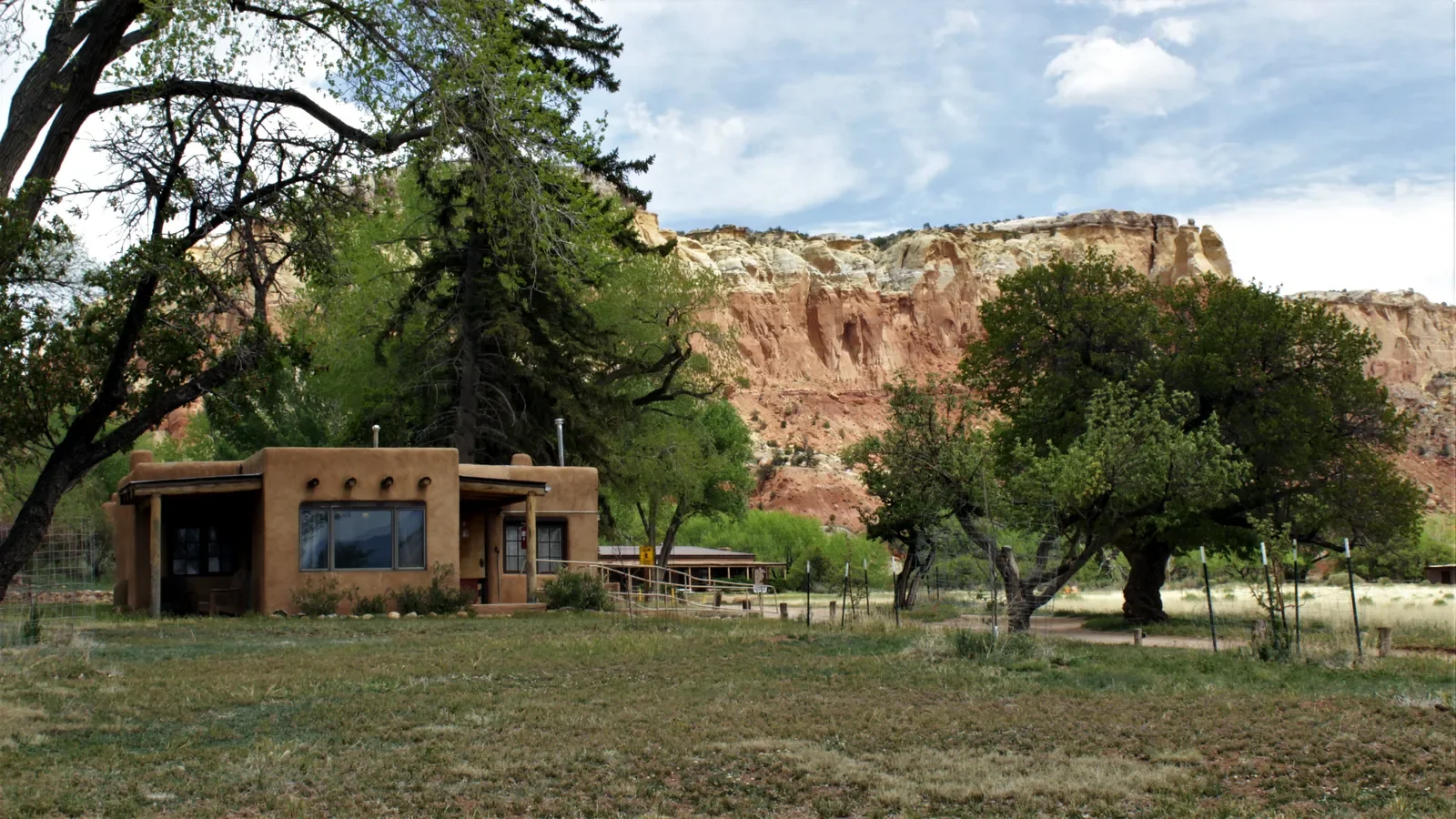
The Georgia O'Keeffe Home and Studio is a historic house museum in Abiquiú, New Mexico. From 1943 until her death, this stark, beautiful home and studio was central to her work. Today this residence is part of the Georgia O'Keeffe Museum, which has sites in Santa Fe and Abiquiú, New Mexico.

Getty Images

ZAHA HADID (ARCHITECTURE) & LONDON

Zaha Hadid was an Iraqi and British architect, artist, and designer. She is recognized as a key figure in the architecture of the late-20th and early-21st centuries.

Her major works include the London Aquatics Center for 2012 Olympics, Broad Art Museum, Rome’s MAXXI Museum, and the Guangzhou Opera House.

In search of an alternative to traditional architectural drawing, and influenced by Supermatism and Russian Avant-Garde, Hadid adopted painting as a design tool and abstraction as a method to "re-investigate the aborted and untested experiments of Modernism to unveil new fields of building.

The Guardian described Hadid as the "Queen of Curves", who "liberated architectural geometry, giving it a whole new expressive identity".

Before her passing, Hadid lived and worked in London, often blending her living spaces with her art and design collections.

Her home was described as having a "fluid," "dynamic," and "curvaceous" style, filled with her own furniture designs and art, such as a homage to Malevich's Tektonik

Photo: Luke Hayes

WINSLOW HOMER (AMERICAN LANDSCAPES) & SCARBOROUGH, MAINE, US

Winslow Homer was an American landscape painter and illustrator, best known for his marine subjects.

He is considered one of the foremost painters of 19th-century America and a preeminent figure in American art.

Homer’s home and art studio is located in Prouts Neck, Scarborough, Maine. The artist lived and worked from this home from 1884 until his death in 1910.

Originally a carriage house, he transformed it into a secluded, rustic, and minimalist space to paint his famous ocean scenes.

The Portland Museum of Art acquired, restored, and offers tours of the studio. 

The studio is known for its pine-paneled walls, a covered balcony, and a distinctive Medusa door knocker used to deter uninvited guests.

The Portland Museum of Art provides guided tours that allow visitors to see the space where he painted. 

Image Source: Wikipedia

FRANK LLOYD WRIGHT (ARCHITECTURE) & OAK PARK, IL, US

Frank Lloyd Wright was an American Architect, designer, writer, and educator, designing over 1,000 structures in his 70 year creative period.

Wright played a key role in the architectural movements of the twentieth century, influencing architects worldwide through his works and mentoring hundreds of apprentices in his Taliesin Fellowship.

Wright believed in designing in harmony with humanity and the environment, a philosophy he called Organic Architecture.

This philosophy was exemplified in Fallingwater (1935), which has been called "the best all-time work of American architecture".

Frank Lloyd Wright’s primary home and studio (1889) is located in Oak Park, IL, serving as the birthplace of his Prairie style and American architecture.

This was his first home, featuring Shingle-style architecture, a central hearth, and an attached studio where he worked for 20 years.

Image Source: Getty Images/ AD


OTHERWORLDLY DELIGHTS: CHIFFON, TULLE, ORGANZA, & MORE


For a sense of otherworldly delight, ethereal pieces such as chiffon, tulle, sheer organza, and frothy, cascading silks are the way to go.


Who could forget the 2014 CFDA Awards when Rihanna attended in a blush pink Adam Selman gown made of 230,000 Swarovski crystals, Dua Lipa’s sheer fish-net dress at the Barbie Movie Premiere, Or Florence Pugh’s transparent Valentino gown in enchanting lavender?

In 1962, sheerness first catapulted into the spotlight when Marilyn Monroe sang her famous ‘Happy Birthday, Mr. President’ performance. From there, stars like Jane Birkin and Cher kept the controversial look on trend throughout the ‘60s,‘70’s, and ‘80’s. 

Then one sheer inspired moment normalized this daring style trend in the 1990’s for everyone, from fashionistas, actors, and everyday people! This moment dates to 1998 when Carrie Bradshaw wore a skin-colored DKNY frock on a date with Mr. Big in season one of Sex and the City.

DESIGNERS SPOTLIGHTS SHEER

Designers such as, Schiapareli, Jean Paul Gaultier, and John Galliano have all been known to dazzle the fashion world by featuring their own sheer creations in their runway shows.

Finding their fashion inspiration from the runways – celebrities, performers, and actors, alike – also play a large role in keeping the sheer trend alive. Because once a sheer styled look walks down the runways? Well, it’s bound to make an appearance or two on the red carpet(s) for all the world to see.

SHEER DELIGHT — AS WORN BY THE STARS

During Vogue World 2025, supermodel Heidi Klum wore a super sheer, short white Vivienne Westwood mini-dress.

For President Emmanuel Macron’s state visit to the UK, the Princess of Wales, Kate Middleton wore a blush-pink Bar jacket and tulle skirt by the former creative director of Dior, Maria Grazia Chiuri with a matching hatr by British designer, Jess Collett. Finishing off the look? The late Queen Elizabeth II’s pearl choker and pearl drop earrings.

Natalie Portman was dressed in an ethereal white dress composed of tiers of sheer organza, straight from Dior’s resort 2026 collection. She paired the organic, floor-length dress with a pair of white strappy heels and a structured white coat.

IT’S SHEER ART HISTORY

Throughout history, fabric has served as a source of inspiration, joy, and self-expression for countless artists.

The greats? — They achieved the impossible, capturing the movement of transparent fabrics throughout their masterworks. The likes of William Adolfe Bouguereau, John Singer Sargent, and Auguste Renoir accomplished this because they appreciated and understood the nature of fabrics as more than an afterthought, but a vital element in their paintings.

Feeling inspired? Add some whimsy and intrigue to your wardrobe with these transparent must-haves.


SHEER TOPS


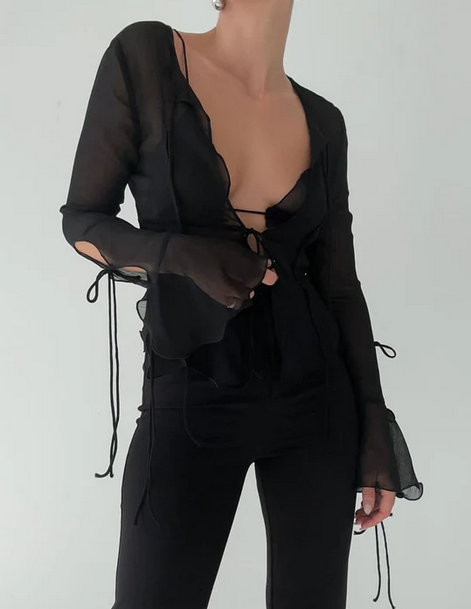
SLEEVE TOP AT ANTHROPOLOGY FOR $60

SHEER EAST END TOP AT RUMORED FOR $74

Lace Sheer Fitted Tank at Nordstrom for $1,290


SHEER SILK TOP AT NORDSTROM FOR $350

GRAPHIC TEE AT ANTHROPOLOGY FOR $98

Off-Shoulder Pink Sheer Blouse at Its Milla for $390


SHEER DRESSES


PHOTO: EDWARD BERTHELOT/GETTY IMAGES // REFINERY29


ASYMMETRICAL RUFFLE SHEER ORGANZA DRESS AT NORDSTROM FOR $400

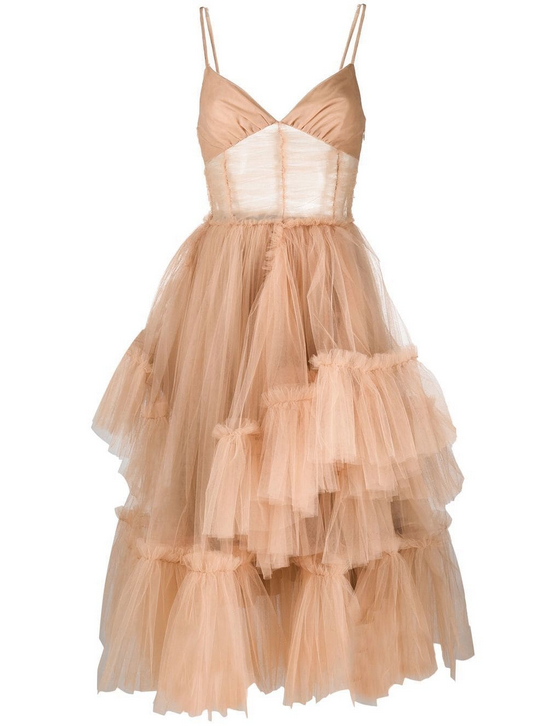
CORSET TULLE GOWN AT FARFETCH FOR $535

ACT N1 TIERED TULLE BLUE MIDI DRESS AT FARFETCH FOR $1,591


ACT N1 DEGREE: TIERED TULLE MIDI DRESS AT FARFETCH FOR $1,871

SHEER TULLE LONG DRESS AT FARFETCH FOR $491

ASYMMETRICAL TULLE DRESS AT ALEXANDER MCQUEEN FOR $4,590


SHEER SKIRTS


PHOTO: GETTY IMAGES // INSTYLE MAGAZINE


YELLOW TULLE MAXI SKIRT AT FARFETCH FOR $1,040

PLEATED MAXI SKIRT HOT PANT AT ALICE + OLIVIA FOR $495

SHEER SKIRT AT URBAN OUTFITTERS FOR $85


CHIFFON SKIRT AT BERDOF GOODMAN FOR $990

DARK FLOWERS TULLE SKIRT AT 243.COM FOR $275

RUFFLED SILK CIGA-LINE SKIRT AT MATCHES $8,200